Short answer
Ube is a purple yam (Dioscorea alata) used across Filipino sweets, with a mild, nutty, vanilla-like flavor. It is not taro or purple sweet potato, and it appears in bread, pastries, jam, ice cream and cake.
Ube is a purple yam, botanically Dioscorea alata, that is grown and eaten across the Philippines and is the signature flavor of many Filipino desserts. Its flesh is a deep purple, its taste is mild, nutty and a little like vanilla, and it is cooked and mashed into jam, bread, pastries, cakes and ice cream. This guide explains what ube is, how it differs from taro and purple sweet potato, what forms are sold, and which ube items appear on the menu of Nanding’s Bakery in Honolulu as recorded in November 2026.
What is ube?
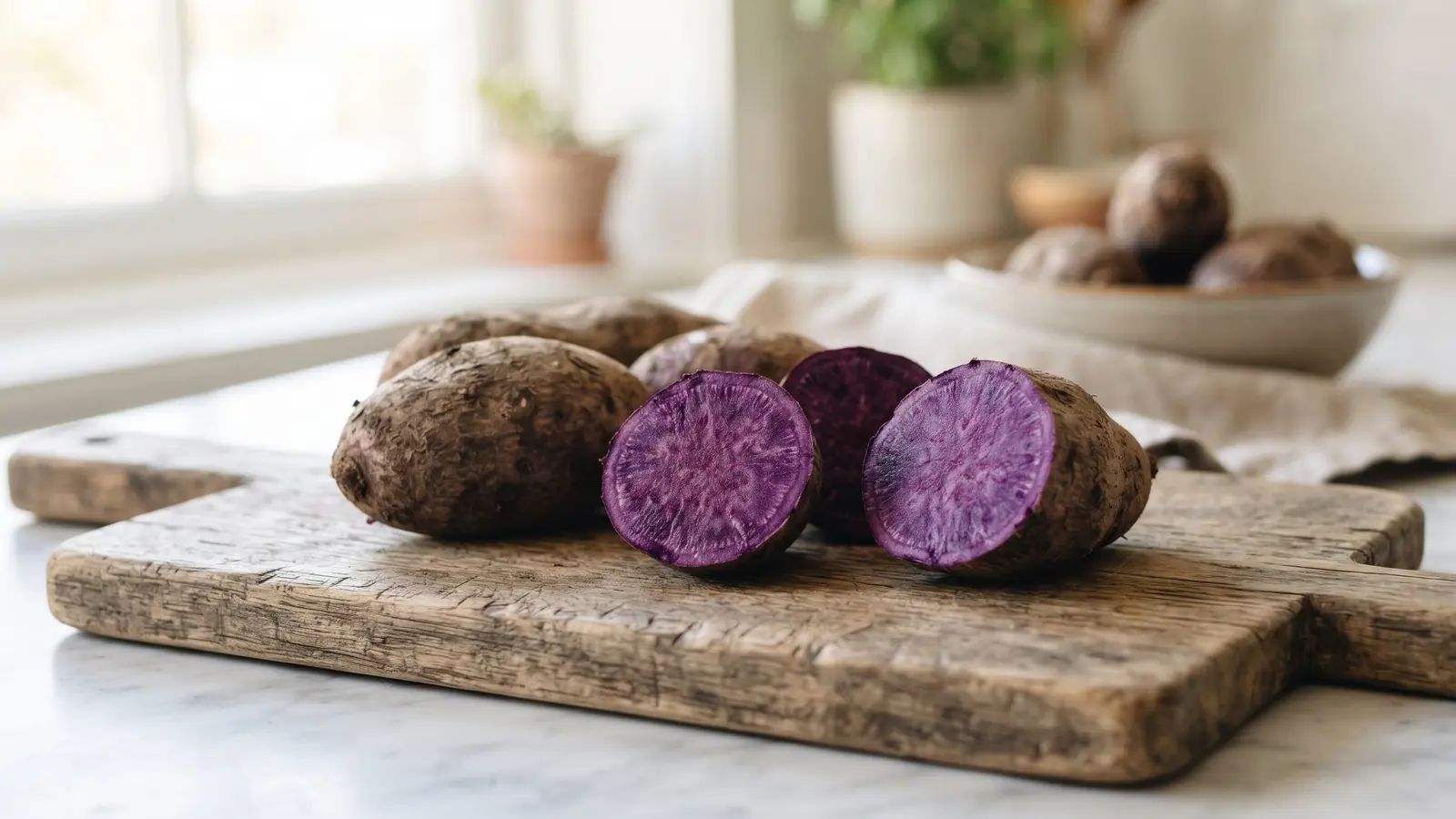
Ube, pronounced roughly OO-beh, is a root vegetable in the yam family. It is a tuber with rough, brownish skin and flesh that ranges from pale lavender to deep violet. The plant is known in English by several names, including purple yam, greater yam, water yam and winged yam, and Dioscorea alata is its scientific name.
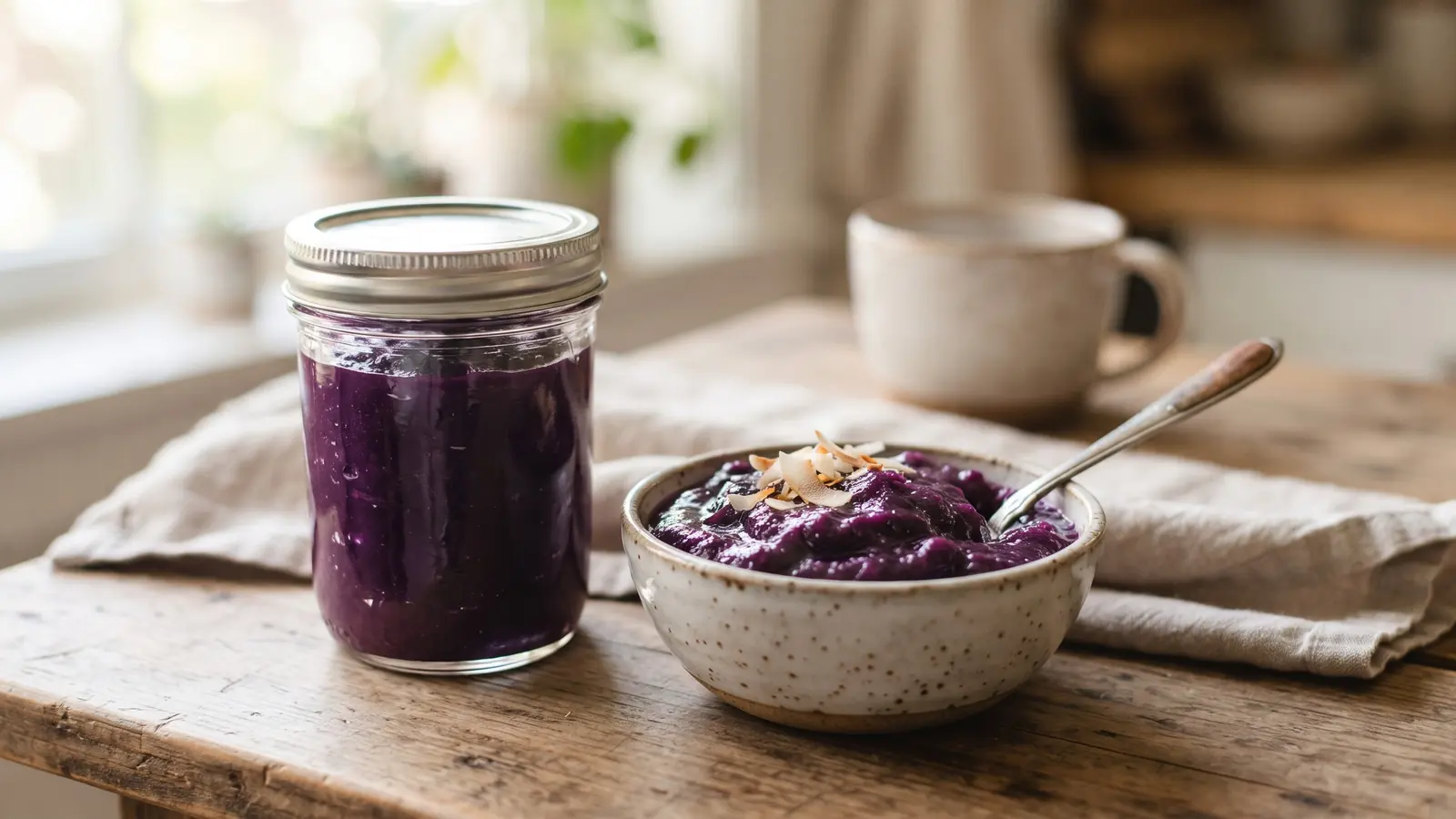
In Filipino cooking, ube is mostly eaten as a sweet. It is boiled or steamed, mashed and cooked with sugar and milk into a smooth jam called ube halaya, which is then used as a filling, a topping or a dessert on its own. The flavor and color have made ube a popular ingredient in modern bakeries, where it is used in rolls, loaves, cakes and pastries.
Ube is not a sweet potato and it is not taro. The three are often confused because of their color and shape, but they are different plants.
What does ube taste like?
Ube tastes mildly sweet, nutty and a little like vanilla, with a creamy, earthy base. Many people describe it as something between a sweet potato and white chocolate, but those comparisons are loose. On its own, boiled ube is not very sweet, so most of the sweetness in an ube dessert comes from added sugar and milk.
The texture is starchy and smooth when mashed, which makes it good for fillings and spreads. In cakes and breads, ube adds moisture and a soft crumb as well as color.
The flavor is gentle, so recipes often rely on ube extract or other flavorings to make it stronger. Because the base taste is mild, two ube products can taste quite different, depending on how much real ube, sugar, milk and extract each contains.
Ube vs taro vs purple sweet potato: how do you tell them apart?
Ube is a yam with a uniformly purple interior, taro has white flesh with purple flecks, and purple sweet potato has purple flesh but a drier, more potato-like taste. The color alone is not enough to tell them apart in a finished dessert.
| Feature | Ube | Taro | Purple sweet potato |
|---|---|---|---|
| Plant | Dioscorea alata, a yam | Colocasia esculenta, a corm | Ipomoea batatas, a sweet potato |
| Flesh color | Deep, even purple | White or cream with purple flecks | Purple, often darker or reddish |
| Flavor | Mild, nutty, vanilla-like | Earthy, starchy, mild | Sweet, potato-like |
| Typical use | Filipino sweets, halaya, bread | Bubble tea, savory dishes, Asian desserts | Baking, roasting, some Asian desserts |
| Texture | Smooth and moist when mashed | Starchy and slightly dry | Dense and moist |
A common source of confusion is the bubble tea and dessert world, where taro and ube drinks are often sold side by side and are sometimes mislabeled. If the label matters, read the ingredient list or ask. For a deeper comparison, see the menu page for items marked as ube and ask the shop about their ingredients.
What forms of ube are sold?
Ube is sold fresh, frozen, as powder, as extract and as prepared jam. Which one to buy depends on the recipe and how much work you want to do.
| Form | What it is | Typical use |
|---|---|---|
| Fresh ube | Whole tuber, peeled and boiled or steamed | Cooking from scratch, halaya |
| Frozen grated ube | Peeled and grated ube sold frozen in packs | Convenient base for halaya and baking |
| Ube powder | Dried, ground ube | Adding flavor and color to doughs, batters, drinks |
| Ube extract | Concentrated flavoring, sometimes with added color | Boosting flavor and color in cakes and ice cream |
| Ube halaya | Cooked sweet jam, sold in jars or tubs | Filling, spread, topping, halo-halo |
Fresh ube is harder to find than the others, and it may be available only at Asian grocers or specialty shops. Frozen grated ube and powder are the easiest to use for baking. Ube halaya is already sweetened, so recipes that use it need less sugar.
Is ube naturally purple?
Ube flesh is naturally purple, but the intensity varies and finished products often use added coloring. The color of boiled ube is usually a softer, more muted purple than the bright shade seen in many bakery items. To get a vivid result, some cooks add food coloring or an extract that contains color.
A deep, bright purple therefore does not prove that a product contains a lot of ube. It might also mean the product uses a purple sweet potato, taro or food coloring. For people with allergies or dietary restrictions, the ingredient list is the correct source.
When a bakery sells an ube item, the color tells you little about the amount of ube inside. The best test is the flavor, which should taste mildly nutty and sweet rather than only sugary.
How is ube used in Filipino baking and desserts?
Ube appears in bread, pastries, cakes, jam, ice cream, drinks and shaved ice desserts. The most traditional use is ube halaya, the cooked jam. In halo-halo, a shaved ice dessert, a spoonful of halaya is a common topping.
Other common uses include:
- Ube bread and rolls, where the dough or filling is purple.
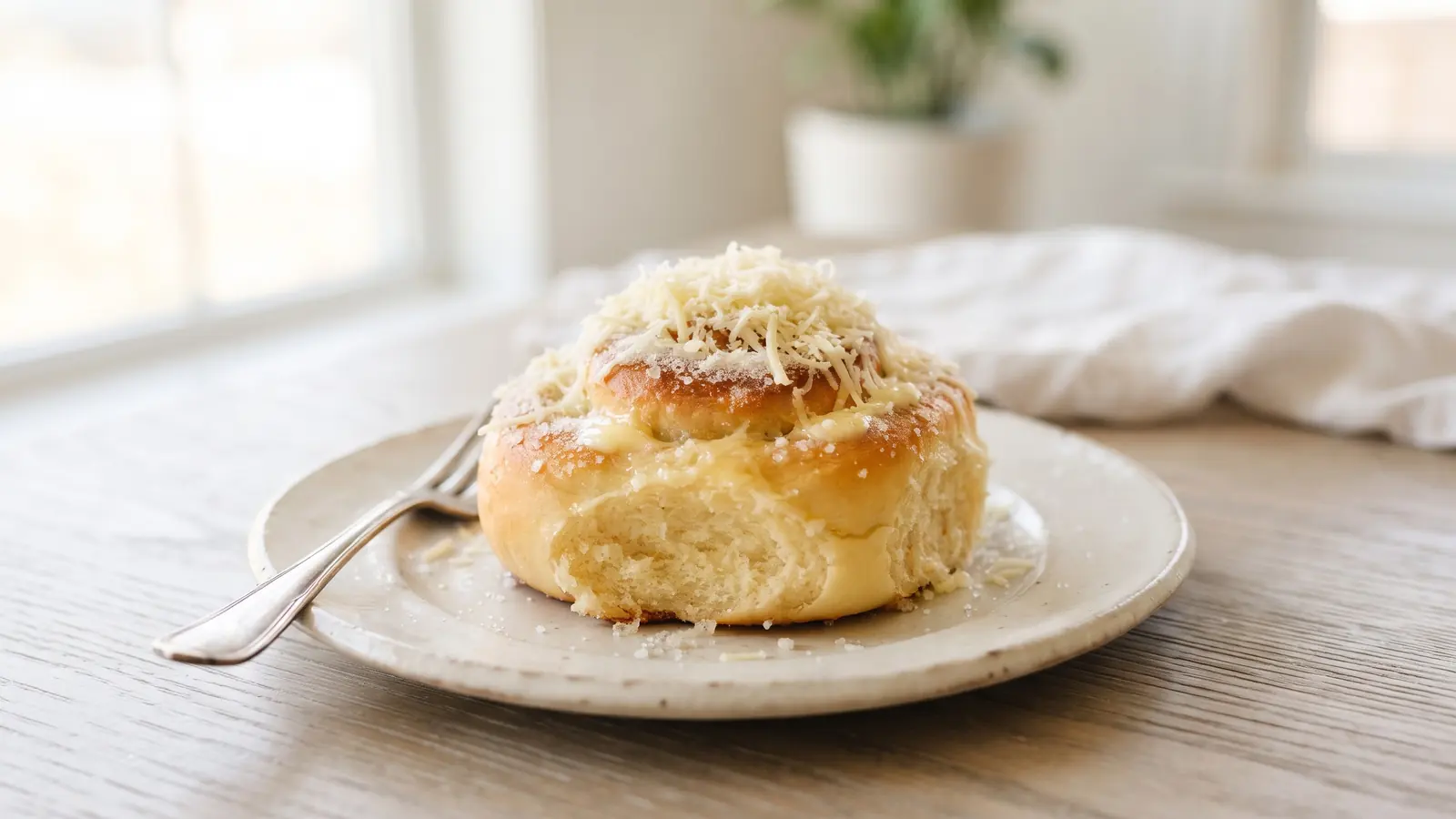
- Ube cheese pandesal, in which ube dough is paired with a cheese center.
- Ube cakes and roll cakes, often with a purple sponge or cream.
- Ube ice cream, one of the most widely sold ube products.
- Ube puff pastry and other pastries filled with halaya.
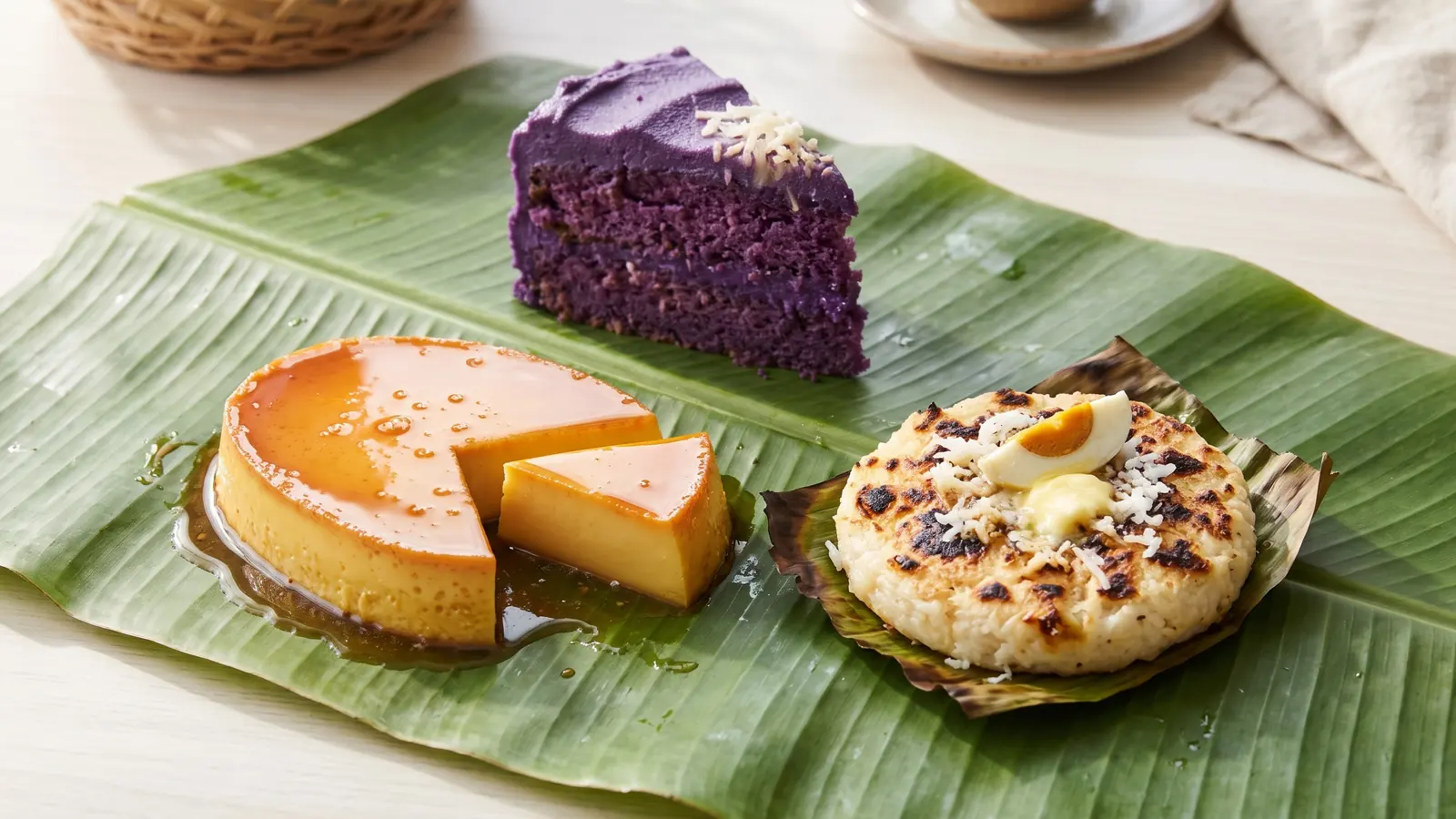
- Rice cakes, such as bibingka made with ube.
In Filipino-American bakeries, ube has become a signature trend item. Its color makes it popular for photographs, and it works well as a filling in familiar shapes such as rolls and doughnuts.
Which ube items appear at Nanding’s Bakery?
Several ube items are named in the sources for Nanding’s Bakery and appear on its menu as recorded in November 2026. No current price was found for any of them, so none is stated here.
| Menu item | What the sources say |
|---|---|
| Ube Spanish roll | A Spanish roll with ube swirled into the bread, reported by Honolulu Magazine |
| Ube cheese pandesal | A pandesal with ube and cheese, reported by a 2024 student newspaper article |
| Ube bread | Reported in a 2018 column |
| Ube puff pastry | Ube-filled puff pastry, reported in 2018 and 2024 |
| Ube roll | Listed at 75 cents in 2007; current availability unknown |
| Bibingka | A rice cake made with ube, reported in 2018 |
The older price for the ube roll is a 2007 figure, and the other items have no price in the sources. The sources do not say how much real ube is in any of these items or whether extract or food coloring is used, so ask the shop if that matters to you. For the shop’s phone, hours and address, see hours and location.
How do you store and cook with ube?
Fresh ube keeps best in a cool, dry place, and cooked ube should be refrigerated. Wrap cooked ube or halaya in an airtight container and use it within a few days, or freeze it for longer storage. Ube powder keeps well in a sealed jar away from heat and moisture.
For cooking, a few points are worth knowing:
- Boil or steam fresh ube until completely tender before mashing.
- Use a fine sieve or food processor for a smooth texture.
- Cook mashed ube with milk, sugar and butter to make halaya, stirring so it does not stick.
- When adding powder to a batter, mix it with some liquid first so it does not clump.
- Expect the color to fade slightly in the oven, and use extract or powder if a stronger shade is wanted.
These are general kitchen notes, not instructions from any particular bakery. Ube is a food ingredient like any other, and this guide makes no health claims about it.
What are common mistakes with ube?
The most common mistake is mixing up ube with taro or purple sweet potato and expecting the same flavor. A recipe written for ube will taste different if taro is swapped in, because taro is starchier and less sweet.
Other mistakes include:
- Relying on color to judge quality, when food coloring can make any product look purple.
- Using too much extract, which can leave a perfume-like aftertaste.
- Buying sweetened halaya when a recipe needs plain mashed ube, which makes the result too sugary.
- Over-baking, which dulls the color and dries the crumb.
When in doubt, taste a small amount before using it in a large recipe. Ube products vary by brand more than most people expect.
Common questions
How do you pronounce ube?
It is commonly said as OO-beh, with two syllables. English speakers also say OO-bay.
Is ube the same as taro?
No. Ube is a yam with deep purple flesh and a sweet, nutty flavor. Taro is a different plant with white or pale flesh flecked with purple, and it tastes starchier and milder.
Is all purple dessert ube?
No. Purple sweet potato, taro and food coloring can all produce a purple color, so a purple dessert is not proof of ube. Check the ingredients.
Is ube naturally this purple?
Ube flesh is naturally purple, but the shade varies, and some shops add food coloring or extract to make the color more intense. Ask or read the label if it matters.
Where can you buy ube?
Fresh ube is found in some Asian grocers, and frozen grated ube, ube powder, ube extract and ube halaya are sold in jars or packs at many Filipino and Asian stores.
Looking for the basics? Nanding's Bakery address and opening hours are on the home page.
This article is general information from an independent guide, not from Nanding's Bakery itself. For the store’s current details see hours and location.