Short answer
Filipino desserts range from custards such as leche flan to shaved-ice halo-halo, fried turon and a family of sticky rice sweets called kakanin. Most use coconut, rice, sugar, eggs or purple yam.
Filipino desserts are the sweets of the Philippines, ranging from egg custards such as leche flan to shaved-ice halo-halo, fried banana turon, sticky rice cakes and purple yam jam. Many are built from coconut, rice, sugar, eggs and root vegetables, and a large group of rice sweets is known by the word kakanin. This guide explains what the classic desserts are, how they differ, and which of them appear on the menu of Nanding’s Bakery in Honolulu as recorded in November 2026.
What are the most common Filipino desserts?
The most common Filipino desserts are leche flan, halo-halo, bibingka, puto, kutsinta, biko, turon, ube halaya, buko pandan and cassava cake. Each one has a different base: custard, shaved ice, rice flour, banana, yam or coconut.
| Dessert | What it is | Main ingredients |
|---|---|---|
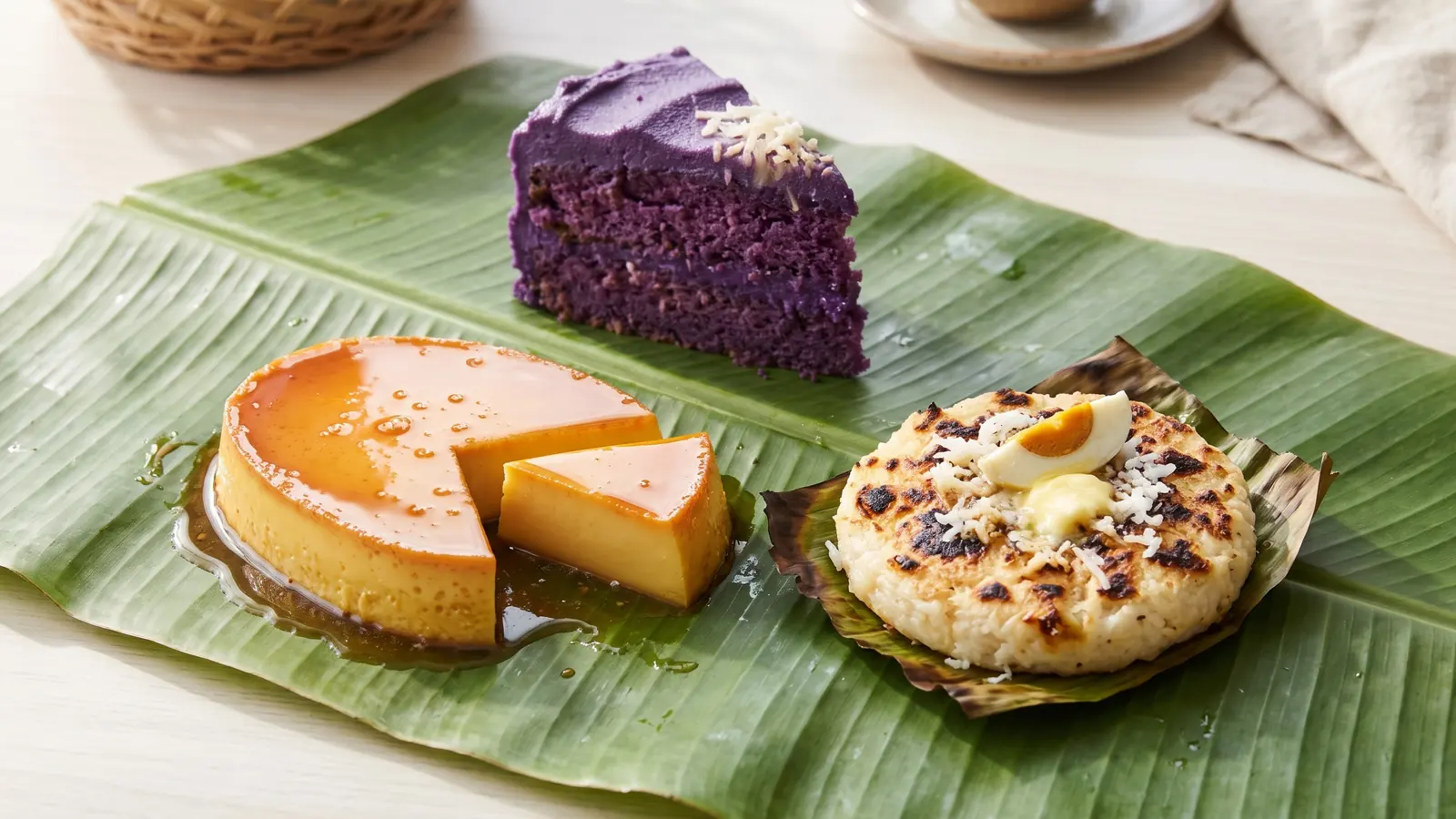
| Leche flan | A dense caramel custard | Egg yolks, condensed milk, caramel |
| Halo-halo | A shaved ice dessert with mixed toppings | Shaved ice, milk, beans, fruit, jelly, ube halaya |
| Bibingka | A soft rice cake baked with a banana leaf | Rice flour, coconut milk, eggs, sugar |
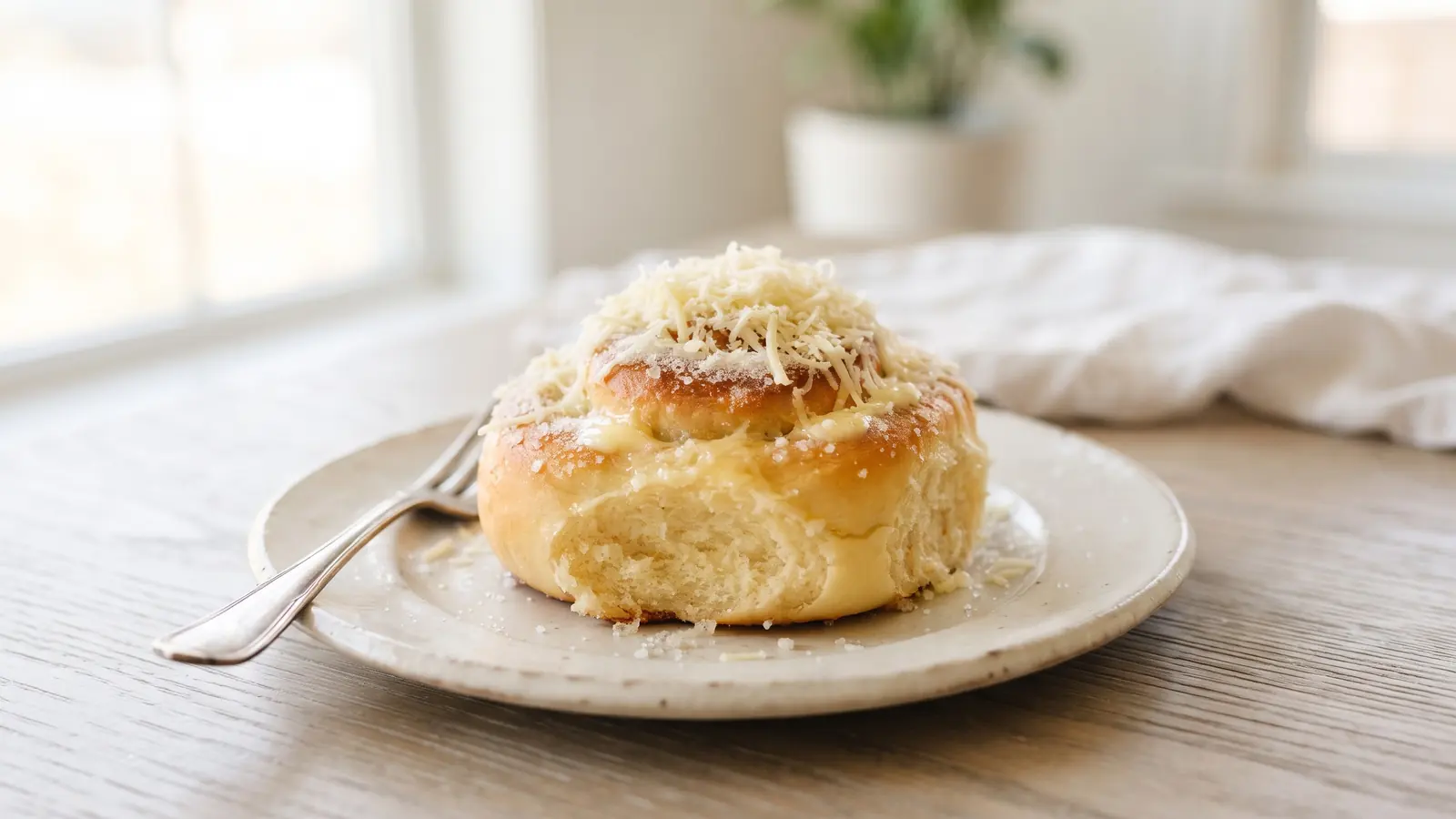
| Puto | A small steamed rice cake | Rice flour, sugar, sometimes cheese on top |
| Kutsinta | A chewy, brown steamed cake | Rice flour, brown sugar, lye water |
| Biko | A sticky rice cake topped with caramelized coconut | Glutinous rice, coconut milk, brown sugar |
| Turon | Fried banana in a thin wrapper | Saba banana, sometimes jackfruit, brown sugar, lumpia wrapper |
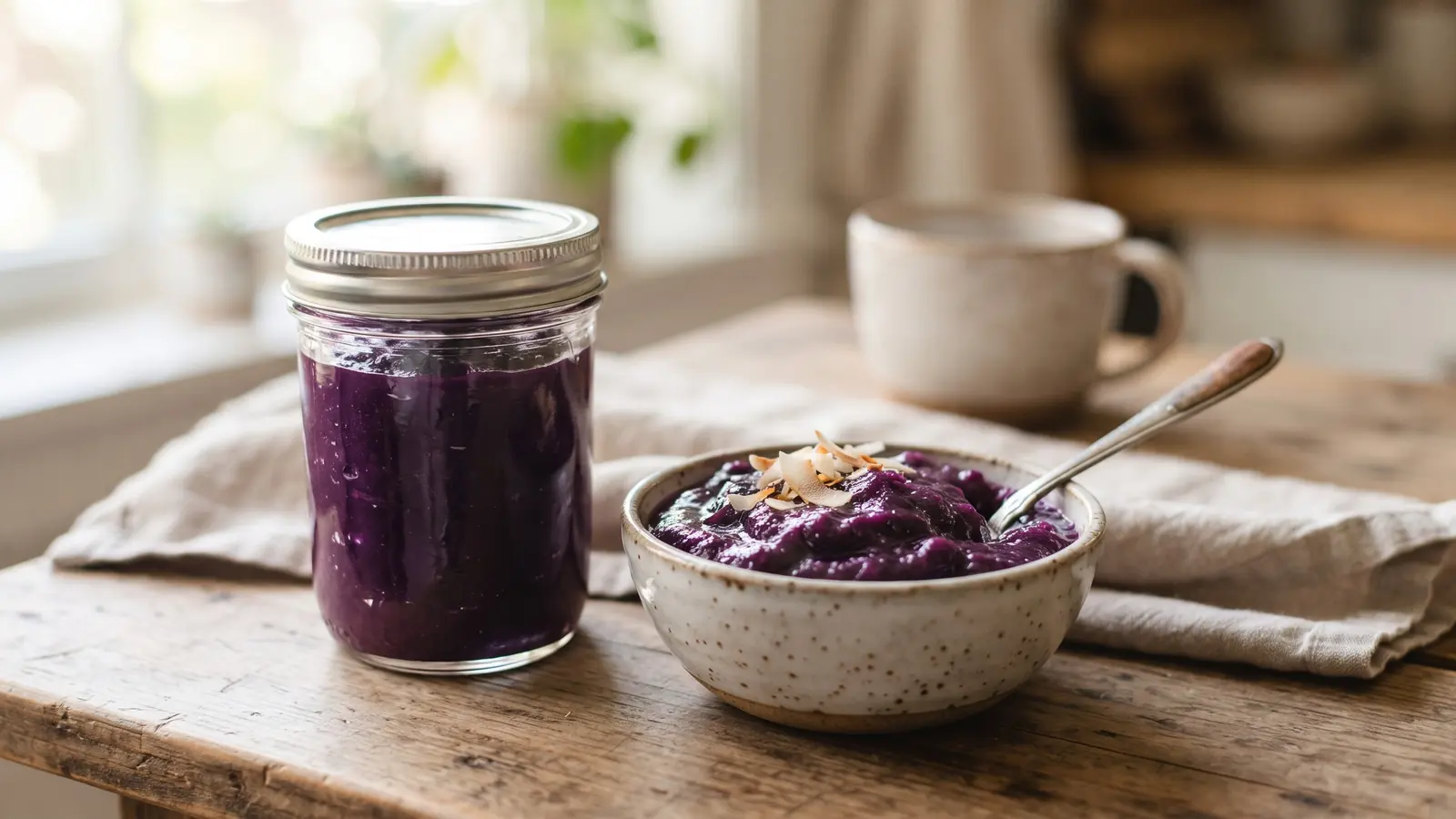
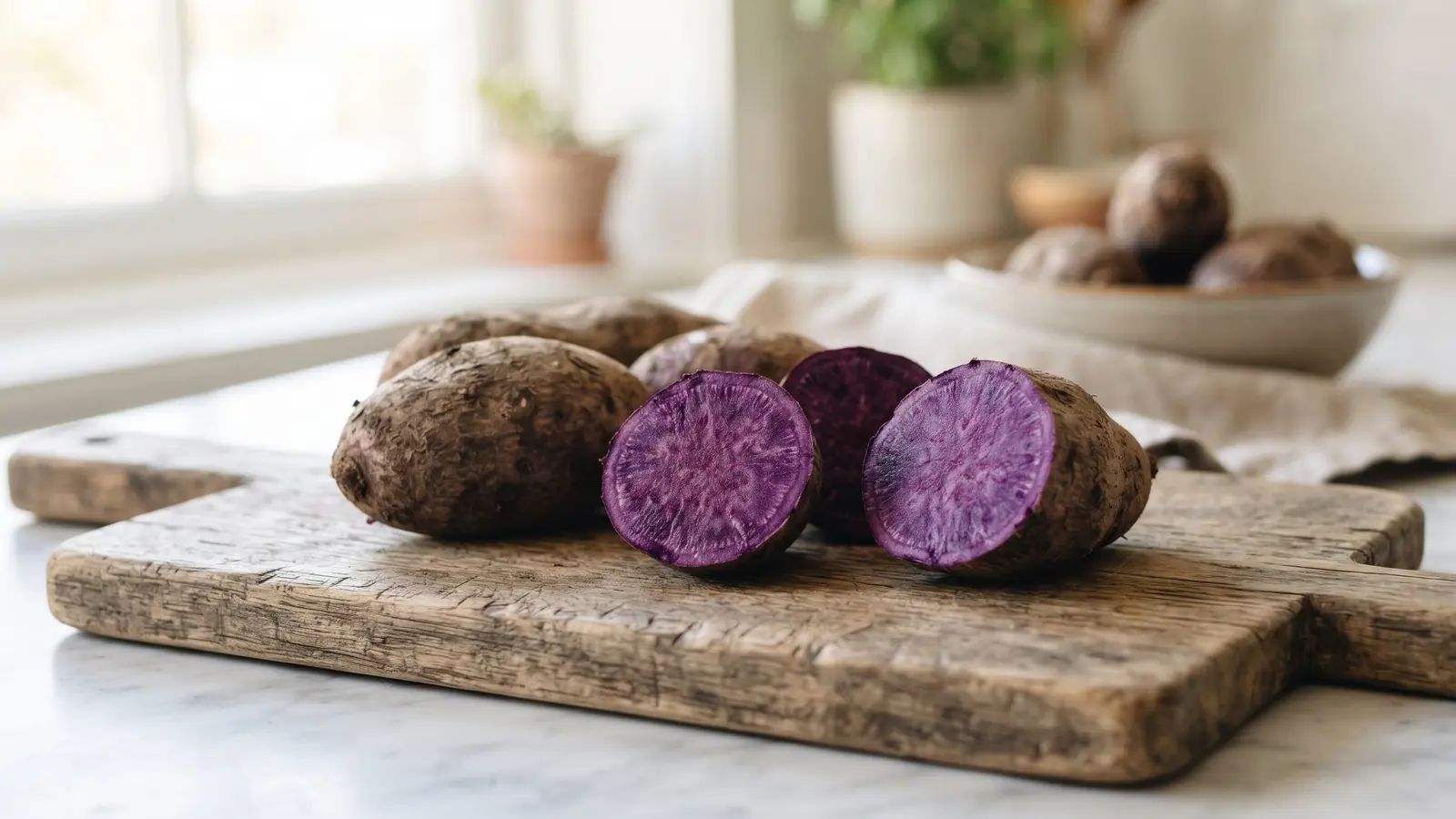
| Ube halaya | A thick purple yam jam | Ube, milk, sugar, butter |
| Buko pandan | A chilled coconut and pandan dessert | Young coconut, pandan jelly, cream or milk |
| Cassava cake | A dense, chewy baked cake | Grated cassava, coconut milk, sugar |
The list is not complete. Regional desserts, seasonal sweets and family recipes add many more, and the exact ingredients of each dish vary from cook to cook.
What is kakanin?
Kakanin is the Filipino word for a family of sweet snacks and desserts made from rice or sticky rice, coconut milk and sugar. Many kakanin are steamed or baked, and they are often eaten as merienda, the afternoon snack, or at gatherings and holidays.
The group includes bibingka, biko, puto, kutsinta, suman, sapin-sapin and cassava cake, though the last is made from cassava rather than rice. Banana leaves are often used for wrapping and cooking, which gives some kakanin a light, grassy aroma.
The word kakanin comes from the Tagalog root for eating or food, and it is a loose category. It is not a strict technical term, and people may place some desserts inside or outside the group depending on region and habit.
What are the classic Filipino custards and chilled desserts?
The two most recognizable are leche flan and halo-halo. They are very different, but both are found on many Filipino celebration tables.
Leche flan is a caramel custard made with egg yolks and condensed milk, steamed or baked in an oval mold called a llanera. It is richer and denser than many other custards because it uses more yolk. Halo-halo is a layered dessert of shaved ice, milk, sweet beans, fruit, jelly and usually a scoop of ice cream or a spoonful of ube halaya. The name means mix-mix, since the dessert is stirred together before eating.
Buko pandan is a chilled dessert with young coconut strips, pandan-flavored jelly and cream or milk. Pandan gives it a green color and a sweet, grassy aroma.
What are the classic rice and coconut sweets?
Bibingka, puto, kutsinta and biko are the best-known rice-based sweets, and they differ in texture. Bibingka is soft and spongy, puto is light and fluffy, kutsinta is chewy and sticky, and biko is thick and sticky with a sweet topping.
| Sweet | Texture | Cooking method |
|---|---|---|
| Bibingka | Soft, spongy, slightly moist | Baked, traditionally with a banana leaf |
| Puto | Light, fluffy, cake-like | Steamed |
| Kutsinta | Chewy, gelatin-like | Steamed |
| Biko | Dense, sticky | Cooked, then baked or topped with caramelized coconut |
| Suman | Dense, sticky rice roll | Steamed in leaves |
Bibingka is widely linked to the Christmas season, and the same is true for puto bumbong, a purple steamed rice cake. These seasonal links are common, but timing varies from household to household.
What are the classic fried and fruit-based Filipino desserts?
Turon and banana-based sweets are the main fried desserts. Turon is a sweet snack made from a banana, often the saba variety, rolled in a thin wrapper with brown sugar and sometimes jackfruit, then fried until crisp and caramelized.
Fruit appears in many other desserts as well. Mango, young coconut, jackfruit and pineapple are found in halo-halo, salads and drinks. A Filipino fruit salad often mixes canned fruit with cream and condensed milk, and it is a common party dish.
These sweets are usually made fresh and eaten soon after cooking, so they are more often found at stalls and home kitchens than on a bakery shelf.
Which Filipino desserts are on the Nanding’s Bakery menu?
Only a few of the classic desserts appear on the Nanding’s Bakery menu as recorded in November 2026, since the bakery is a bread and pastry shop and not a dessert counter. The sources used for this guide list the items below that fit the dessert category. No current prices were found for any of them.
| Menu item | What the sources say |
|---|---|
| Bibingka | A rice cake made with ube, reported in 2018 |
| Hopia mongo | A sweet filled pastry, $2.60 in 2018 |
| Ube puff pastry | Ube-filled puff pastry, reported in 2018 and 2024 |
| Ube roll | 75 cents in 2007; current availability unknown |
| Strawberry pianono roll | A cake roll tried by a 2017 blogger |
| Cake roll | Reported in 2018 |
| Balintawak bread | A red-tinted, cakey bread pudding wrapped in sweet bread, 95 cents in 2018 |
Leche flan, halo-halo, turon, puto, kutsinta, biko and cassava cake are not on the menu as recorded in the sources, so the bakery should not be assumed to sell them. The prices above are older figures with their years, not current prices. Ask the shop for today’s range and availability by calling (808) 367-1172, and see the menu page for details.
How is leche flan different from other flans?
Leche flan is denser and richer than most other flans because it is made mostly from egg yolks, and it is usually sweetened with condensed milk. The Spanish name means milk flan, and the dessert is related to the caramel custards found in Spain and Latin America.
A creme caramel or a typical flan uses whole eggs and fresh milk, which gives a lighter, more delicate set. Leche flan has a thicker, smoother texture that holds its shape firmly when turned out of the mold, and the caramel on top forms a glossy sauce. It is a common dish at birthdays, fiestas and Christmas tables, and it is often sold in oval tins. The exact recipe varies by family, so some versions are sweeter or firmer than others.
What are pianono and the other cake rolls?
Pianono is a thin sponge cake rolled around a sweet filling, and it is sold at many Filipino bakeries. The name is Spanish-derived, and the cake is related to other jelly rolls and Swiss rolls, though the Filipino version is typically lighter and more delicate than a dense cake.
Fillings include butter cream, custard, fruit jam and flavored creams. The menu for Nanding’s Bakery, as recorded in November 2026, lists a Strawberry pianono roll, tried by a 2017 blogger, and a general Cake roll reported in 2018. Neither has a current price in the sources, and whether either is still sold was not confirmed.
How do Filipino bakery sweets differ from home-style desserts?
Bakery sweets are baked goods that are mostly made from wheat flour, while many home-style desserts are made from rice, coconut and eggs. The difference comes from technique and equipment. A bakery has ovens and trays suited to bread, pastries and cakes, while a kakanin often needs steamers, banana leaves or a long stirring pot.
Bakery sweets also tend to be sold by the piece, in boxes or bags, and eaten as snacks on the go. Custards, shaved ice and fresh fruit desserts need refrigeration or ice and are more often served at restaurants and home tables.
This is a general pattern and not a rule. Some bakeries sell kakanin and custards, and some home cooks bake bread. Each shop’s range is best confirmed directly.
How do you choose and serve Filipino desserts?
Choose by texture and sweetness: chewy for kutsinta and biko, soft for bibingka and puto, creamy for leche flan, and crunchy for turon. Serve them in the form they are meant to be eaten, which is often warm for baked and fried sweets and chilled for custards and halo-halo.
A few practical tips:
- Eat steamed and baked rice cakes the same day, since they harden as they cool.
- Keep custards and anything with milk in the refrigerator.
- Reheat turon briefly in an oven to restore the crisp wrapper.
- Ask about ingredients, such as nuts, eggs, dairy or coconut, if there is an allergy.
- Order ahead for large gatherings, since many desserts are made fresh.
A 2018 Star-Advertiser column advised calling a day ahead for large orders at Nanding’s Bakery. That advice is dated, so confirm with the shop.
Common questions
What is the most popular Filipino dessert?
There is no official ranking. Leche flan, halo-halo, ube halaya and bibingka are among the best known, and which one is most popular depends on the region and the occasion.
What does kakanin mean?
Kakanin is the Filipino word for a group of sweet snacks and desserts made mainly from rice or sticky rice, coconut milk and sugar. Bibingka, biko, puto and kutsinta are common examples.
Are Filipino desserts very sweet?
Many are sweet, but the style varies. Coconut, rice and root vegetables often give a soft, mild base, and sugar levels differ by recipe and by cook.
What Filipino dessert is made with purple yam?
Ube halaya is the best-known one. Ube is also used in cakes, ice cream, bread, pastries and as a topping for halo-halo.
Which Filipino desserts are served at Christmas?
Bibingka and puto bumbong are widely linked to the Christmas season in the Philippines, along with leche flan and other holiday sweets.
Everything practical is on the home page: Nanding's Bakery hours, menu and directions.
This article is general information from an independent guide, not from Nanding's Bakery itself. For the store’s current details see hours and location.