Short answer
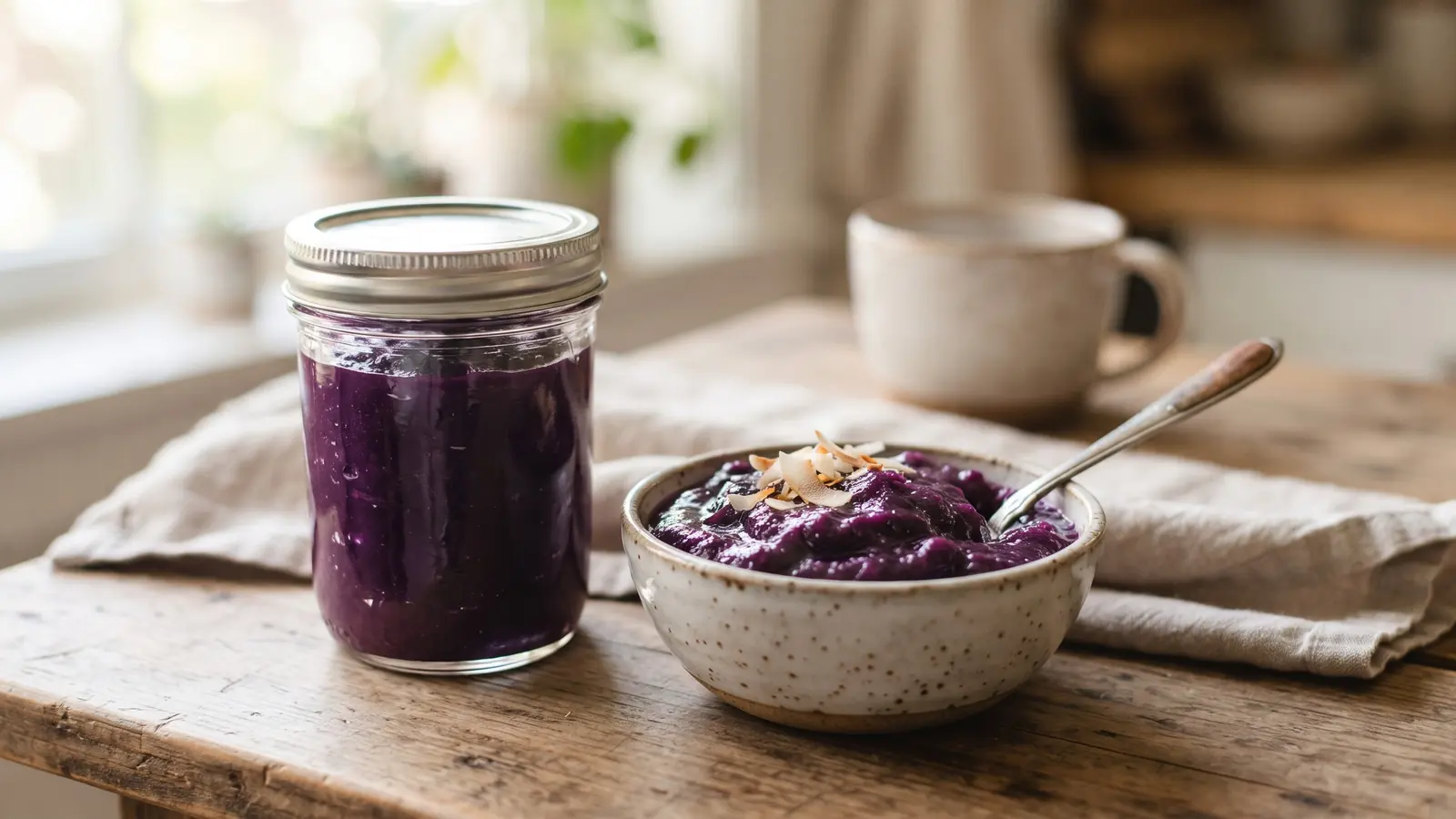
Ube halaya is a thick, smooth, sweet jam made by cooking mashed purple yam with milk, sugar and butter. It is eaten on its own, used as a filling for bread and pastries, and added to halo-halo.
Ube halaya is a thick, smooth, sweet jam made from boiled and mashed purple yam cooked down with milk, sugar and butter. It is deep purple, spreadable and rich, and it is one of the best-known Filipino desserts. It can be eaten on its own, used as a filling for bread and pastries, or added to halo-halo, a shaved ice dessert. This guide explains what ube halaya is, how it tastes, how it is made, where it is used, and how it connects to the ube items listed for Nanding’s Bakery in Honolulu.
What is ube halaya?
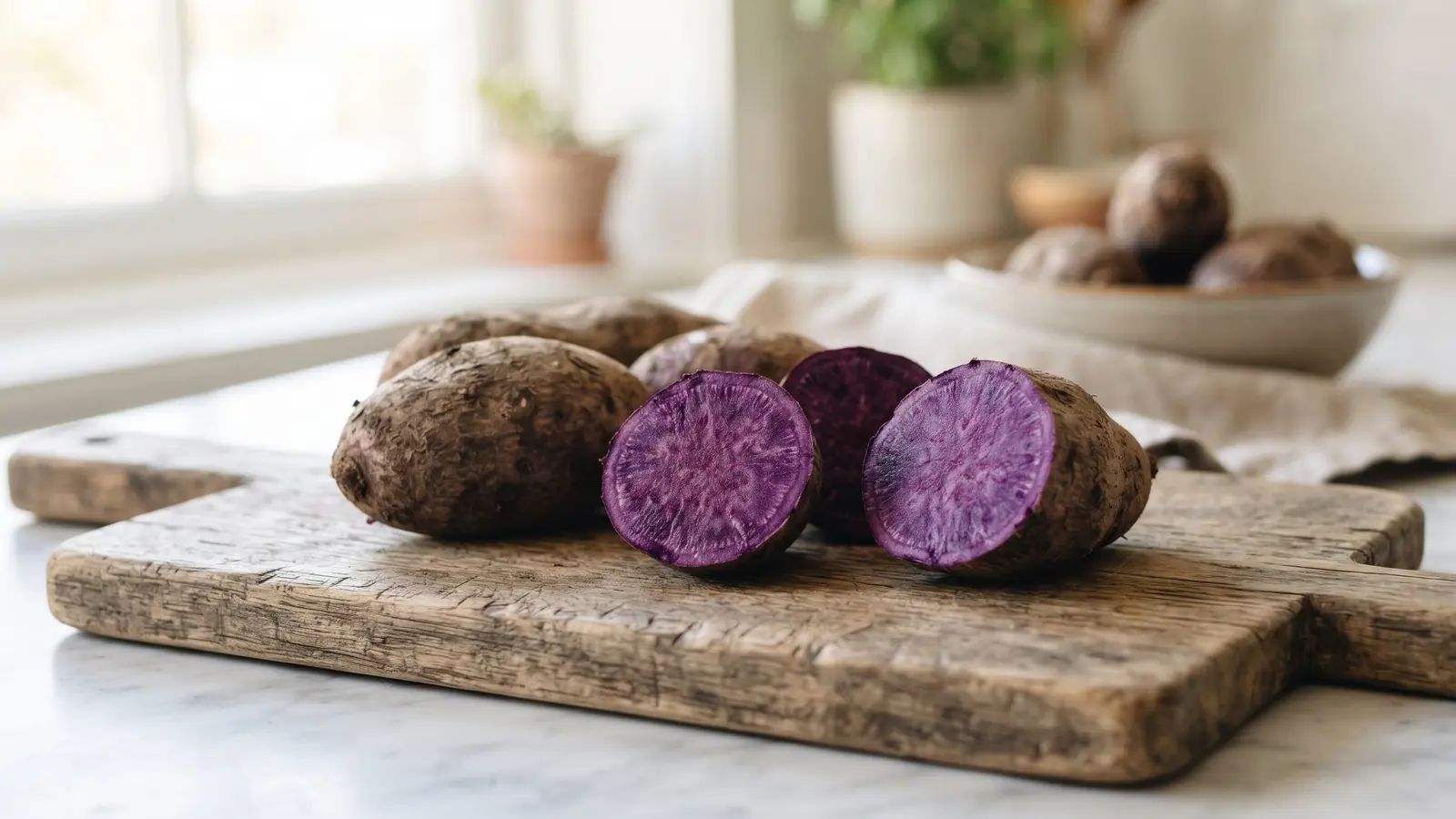
Ube halaya is a cooked, sweetened spread made from ube, the purple yam Dioscorea alata. The yam is boiled or steamed, mashed and stirred over heat with milk, sugar and butter until it becomes thick and glossy. The result is closer to a dense jam or pudding than a fruit preserve.
The name halaya is generally linked to the Spanish word jalea, meaning jelly or jam, though the link is a common explanation and not something this guide has traced to a primary source. In English, the spread is often called ube jam, and on some labels it is sold as ube spread.
Halaya is a standard item in Filipino households, especially during holidays. It is also a base ingredient: many ube breads, pastries and cakes use it as the filling or topping that gives them their color and flavor. For more about the yam itself, see the explanation of what ube is on this site under the Flavors and ingredients category.
What does ube halaya taste like?
Ube halaya tastes sweet, creamy, nutty and mildly vanilla-like, with a smooth, dense texture. The sweetness comes mostly from the added sugar and milk, since plain boiled ube is only lightly sweet. The butter adds richness, and the long cooking time gives a slightly caramelized note.
The texture is the main appeal. It should be smooth and thick enough to hold its shape on a spoon, but soft enough to spread. A grainy halaya usually means the ube was not mashed finely enough, and a runny one was not cooked long enough.
Because ube has a gentle flavor, some versions add ube extract or other flavorings. Ingredient lists differ, and two jars of halaya can taste noticeably different.
How is ube halaya made?
Ube halaya is made by boiling or steaming ube, mashing it, and cooking it with milk, sugar and butter until thick. Most home recipes follow these steps:
- Boil or steam the ube until tender, then peel it if the skin is still on.
- Mash or grate it until smooth, using a sieve or food processor for fine texture.
- Cook the mashed ube in a pot with milk, usually evaporated or condensed, plus sugar and butter.
- Stir constantly over low to medium heat until the mixture thickens and pulls away from the pan.
- Cool and pack into a container or mold.
The stirring is the main work. If the mixture is not stirred, it sticks and scorches on the bottom. Recipes differ in amounts, and some use coconut milk or add cheese or other toppings, so treat any single recipe as one cook’s version.
Frozen grated ube and ube powder are common substitutes for fresh ube. Frozen grated ube is cooked in a similar way, and powder is rehydrated first. The result is usually a little different in color and texture from halaya made with fresh yam.
Where is ube halaya used?
Ube halaya is used as a dessert, a spread, a filling and a topping. It is flexible because it is sweet, smooth and strongly colored.
| Use | How it appears |
|---|---|
| Eaten on its own | Scooped from a dish or molded, sometimes topped with grated cheese or latik |
| Filling | Inside rolls, pandesal, doughnuts, puff pastry and cakes |
| Topping | On top of cakes, ice cream, ensaymada and other pastries |
| Halo-halo | A spoonful on top of shaved ice with milk, fruit and beans |
| Spread | On toast, pandesal or crackers |
| Ice cream and drinks | Blended into ice cream, milkshakes and sweet drinks |
In halo-halo, ube halaya is a standard ingredient, giving the dessert a deep purple layer among the beans, fruit and shaved ice. In bakeries, it is one of the easiest ways to make a purple bread or pastry, since it adds flavor, color and moisture all at once.
How does ube halaya differ from ube extract and ube powder?
Halaya is a finished, sweetened spread, while ube extract is a flavoring and ube powder is a dried ingredient. They are not interchangeable without adjusting a recipe.
| Product | What it is | Sweetened? | Typical use |
|---|---|---|---|
| Ube halaya | Cooked, mashed ube with milk, sugar, butter | Yes | Spread, filling, dessert |
| Ube extract | Concentrated flavoring, sometimes with color | Usually not much | Adding flavor to batters and creams |
| Ube powder | Dried, ground ube | No | Adding flavor and color to doughs and drinks |
| Frozen grated ube | Raw grated ube, frozen | No | Cooking into halaya or baking |
If a recipe calls for halaya and only powder is available, the cook has to add liquid, sugar and fat to replace what the halaya would provide. If a recipe calls for powder and halaya is used instead, the result may be too sweet and wet.
Which ube items are on the Nanding’s Bakery menu?
Several ube items are named in press about Nanding’s Bakery and appear on its menu as recorded in November 2026. The sources used for this guide do not say whether the bakery uses homemade halaya, store-bought jam, powder or extract in these items, so that detail is not confirmed.
- Ube Spanish roll: a Spanish roll with ube swirled into the bread, reported by Honolulu Magazine.
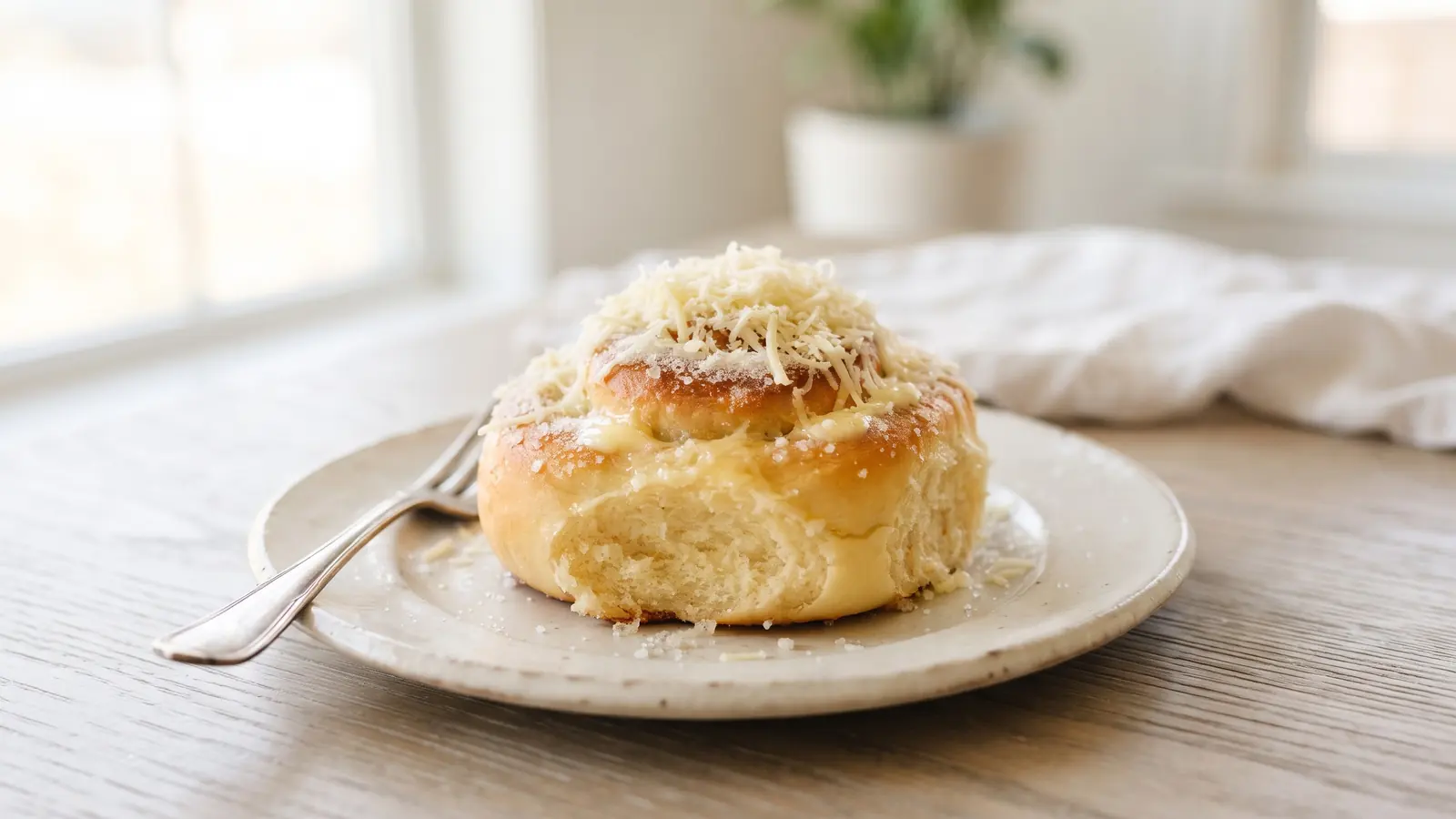
- Ube cheese pandesal: reported by a 2024 student newspaper article in Ka Leo.
- Ube bread: reported in a 2018 Honolulu Star-Advertiser column.
- Ube puff pastry: ube-filled puff pastry, reported in 2018 and 2024.
- Ube roll: listed at 75 cents in 2007; current availability is unknown.
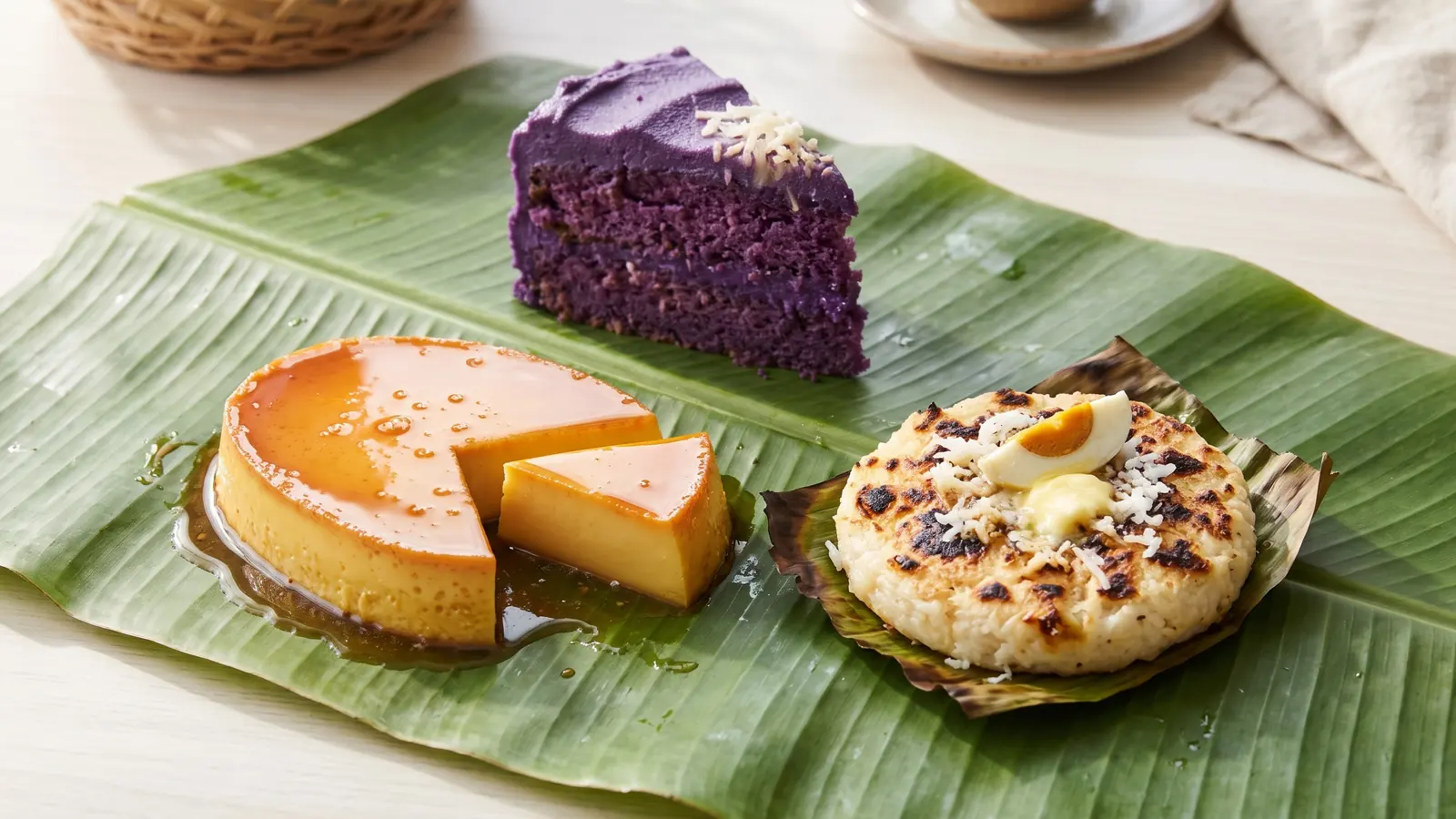
- Bibingka: a rice cake made with ube, reported in 2018.
No current prices were found for any of these. The 2007 price is the only price on record for the ube roll, and it is not a current price. To ask whether an item is available today, call the Martha Street shop at (808) 367-1172. Its hours as listed on Google Maps are Monday 6 AM to 1 PM and Tuesday to Sunday 6 AM to 5 PM, read on November 11, 2026. See the menu page and hours and location.
Store-bought or homemade ube halaya: which is better?
Neither is better in general, since each has a different advantage. Homemade halaya gives control over sweetness, richness and texture, and store-bought halaya saves a lot of stirring time.
| Factor | Homemade | Store-bought jar |
|---|---|---|
| Time | An hour or more of cooking and stirring | Open and use |
| Control | Adjust sugar, milk, butter | Fixed recipe |
| Cost | Depends on ube form and ingredients | Depends on brand and store |
| Color | Natural, can be muted | Often brighter, may include coloring |
| Shelf life | Several days refrigerated | Longer when unopened |
A good compromise for baking is to use a jar of halaya and adjust the sugar in the rest of the recipe, since halaya is already sweet. For a gift or a special dessert, homemade can be worth the time. If you have an allergy or dietary need, always read the label of a store-bought jar, because ingredients vary.
How do you store ube halaya?
Store ube halaya in an airtight container in the refrigerator and use it within several days, or freeze it in portions for longer. Homemade halaya has no preservatives, so it spoils faster than a sealed commercial jar. An opened jar should be kept cold and used according to its label.
To freeze halaya, pack it in a small container or freezer bag and leave a little space, since it expands slightly. Thaw it in the refrigerator, then stir it before using, since freezing can change the texture a little. Warm it gently if it is to be used as a spread.
These are general kitchen guidelines, not advice from any bakery or manufacturer. Food safety depends on the specific product and how it was handled.
What are common mistakes with ube halaya?
The most common mistakes are not stirring enough, undercooking it and using too much sugar. A halaya that is too runny will make a filling leak out of a roll, and one that is too stiff will not spread.
Other points to watch:
- Mashing ube unevenly, which leaves a grainy texture.
- Using only extract for color without enough real ube, which can taste artificial.
- Cooking over heat that is too high, which scorches the milk and sugar.
- Leaving halaya out at room temperature for long periods, which can spoil it.
If buying a bakery item filled with halaya, remember that the filling is sweet and soft, so it is best eaten the day it is baked.
Common questions
Is ube halaya the same as ube jam?
Yes, in everyday English. Halaya is the Filipino word for the cooked, sweetened ube spread, and many English labels call it ube jam.
Is ube halaya the same as ube extract?
No. Halaya is a cooked, sweetened spread made from ube itself. Extract is a concentrated flavoring that is added in small amounts.
Is ube halaya served hot or cold?
It is usually served at room temperature or chilled, though it can be warmed when used as a filling. Traditional versions are sometimes set in a mold.
How long does ube halaya keep?
In an airtight container in the refrigerator it keeps for several days, and it can be frozen for longer. Check the label on a store-bought jar for its own guidance.
Can you make ube halaya without fresh ube?
Yes. Frozen grated ube and ube powder are common substitutes, and each needs to be cooked with liquid, sugar and fat.
Before you go, check the Nanding's Bakery Honolulu guide for the current hours and the menu.
This article is general information from an independent guide, not from Nanding's Bakery itself. For the store’s current details see hours and location.