Short answer
To make pandesal, mix bread flour, sugar, salt, yeast, milk and butter into a soft dough, let it rise, shape small rolls, coat them in fine breadcrumbs, proof them and bake at 375 F for 15 to 18 minutes until golden. The rolls come out soft, lightly sweet and slightly crumbly on the outside.
To make pandesal at home, mix bread flour, sugar, salt, yeast, milk and butter into a soft dough, let it double, shape small rolls, coat them in fine breadcrumbs and bake at 375 F until golden. The method takes about three hours, most of it waiting. The result is a pillowy Filipino bread roll with a light, sandy crust, good warm with butter, cheese or coffee.
What is pandesal?
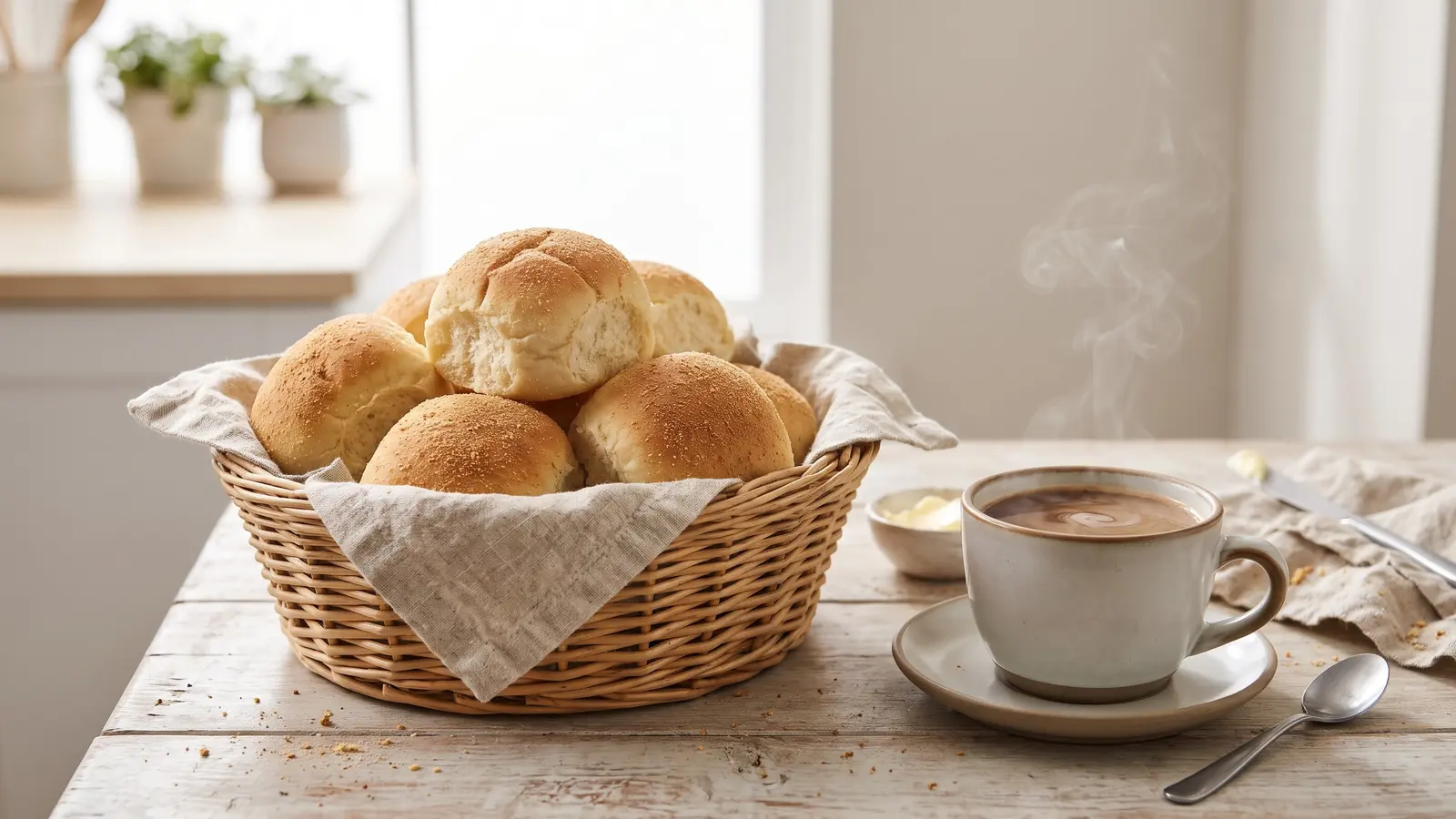
Pandesal, also written pan de sal, is a small, soft Filipino bread roll with a breadcrumb coating, eaten at breakfast and at merienda, the light afternoon snack. The Spanish name means salt bread, although the rolls are only mildly salty and often a little sweet. Pandesal is a yeast bread, closer to a dinner roll than to a baguette, and it is one of the most common breads in a Filipino bakery.
Making it at home is a good first yeast project. The dough is forgiving, the ingredients are ordinary, and the rolls are small enough to bake evenly in a home oven.
What ingredients do you need for pandesal?
You need flour, yeast, sugar, salt, milk, water, butter and an egg, plus fine breadcrumbs for the coating. This list makes about 16 rolls.
| Ingredient | Amount | Role |
|---|---|---|
| Bread flour | 3 cups (about 400 g) | Gives structure and a soft chew |
| Active dry or instant yeast | 2 1/4 tsp (one packet) | Makes the dough rise |
| Sugar | 1/3 cup (65 g) | Mild sweetness and browning |
| Salt | 1 tsp | Flavor, and the nod to the name |
| Warm milk | 3/4 cup (180 ml) | Softens the crumb |
| Warm water | 1/4 cup (60 ml) | Adjusts the dough |
| Butter, softened | 3 tbsp (45 g) | Richness and tenderness |
| Egg | 1 large | Color and softness |
| Fine plain breadcrumbs | 1 cup, for coating | The signature crust |
Bread flour is the first choice because its protein makes a dough that holds air well. All-purpose flour also works, and the rolls will be slightly less chewy. Use plain, dry breadcrumbs without herbs or seasoning.
How do you make pandesal step by step?
Pandesal is made in seven steps: mix, knead, rise, shape, coat, proof and bake. Read through them once before starting.
- Mix. Warm the milk and water until just warm to the touch, about 105 to 110 F. Stir in the yeast and a teaspoon of the sugar and wait 5 to 10 minutes until it looks foamy. Add the rest of the sugar, the salt, the egg and the butter.
- Knead. Add the flour and mix into a shaggy dough. Knead for 8 to 10 minutes by hand, or 5 to 6 minutes in a stand mixer, until the dough is smooth, elastic and slightly tacky. A small piece should stretch thin without tearing.
- First rise. Place the dough in a lightly oiled bowl, cover it and leave it in a warm spot for 60 to 90 minutes, until doubled.
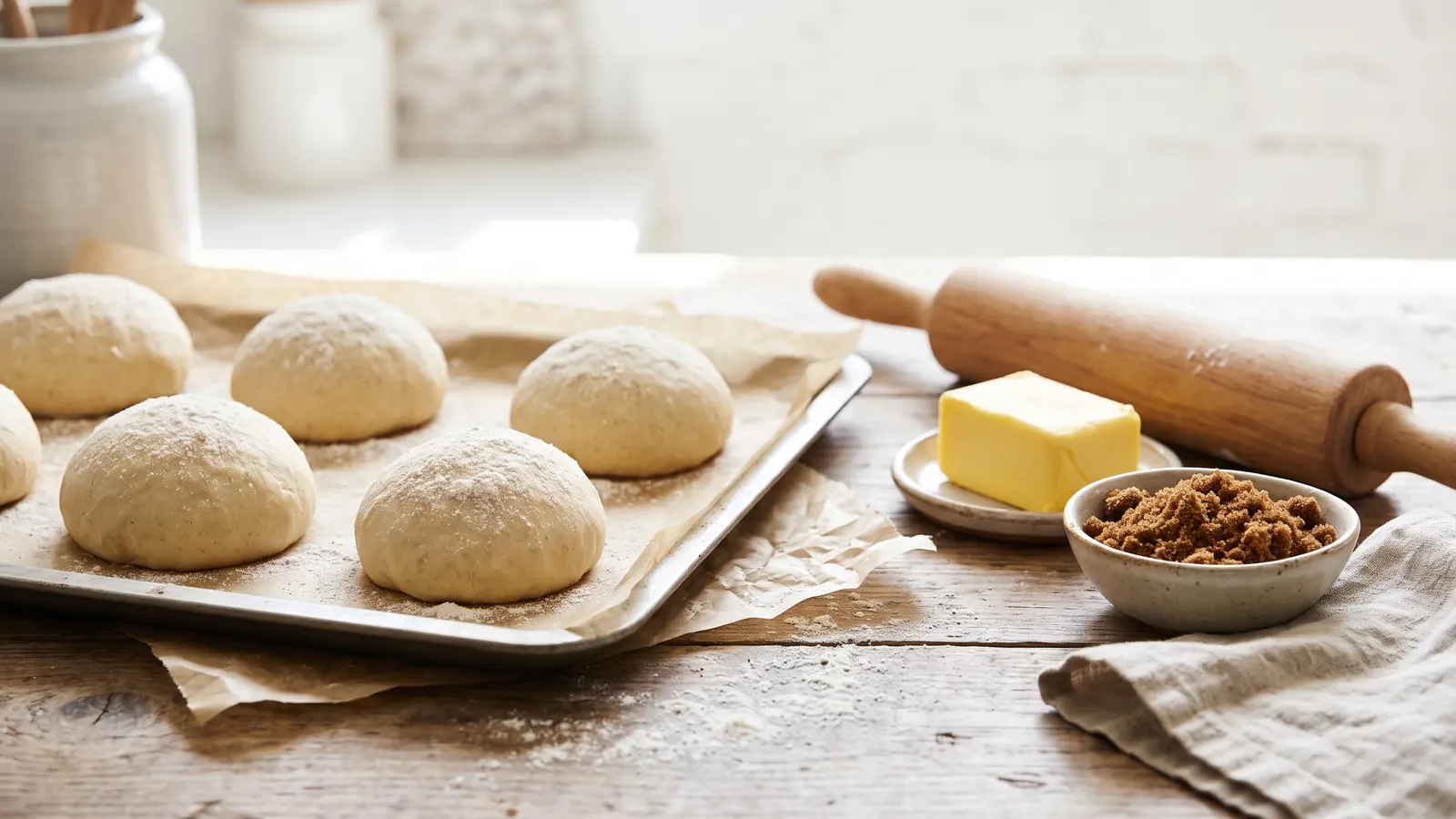
- Shape. Turn the dough onto a clean counter and press out the air. Roll it into a log about 16 inches long. Cut the log into 16 equal pieces, or cut the log in two and cut each half into 8 pieces.
- Coat. Spread the breadcrumbs on a tray. Roll each piece into a smooth ball or short oval, press it into the crumbs on all sides, and place it on a lined baking sheet with a little space between rolls.
- Proof. Cover the tray loosely and let the rolls puff for 30 to 45 minutes, until they look about 1 1/2 times larger and spring back slowly when pressed.
- Bake. Heat the oven to 375 F. Bake for 15 to 18 minutes, until the rolls are golden. Cool on a rack for at least 10 minutes before eating.
How should pandesal be shaped?
Pandesal is traditionally shaped as a log that is cut into pieces, then coated, so the cut sides stay open and rise into the classic slightly irregular form. Many bakeries cut the pieces from a long roll and dip the cut faces in crumbs.
For a home kitchen, there are two simple options:
- Cut-log style. Roll the dough into a log, cut it into pieces and dip each piece in crumbs. The rolls look rustic and a little uneven, like those in many bakeries.
- Round style. Shape each piece into a tight ball and roll it in crumbs. The rolls look neater and bake evenly.
Both give a soft roll. Choose the first for a traditional look and the second for tidy rolls.
What makes pandesal soft?
Pandesal stays soft because of its enriched dough, proper kneading and a full rise. Milk, butter and egg tenderize the crumb, and kneading builds the gluten that traps air. Three habits help most:
- Do not add too much flour while kneading. The dough should feel slightly tacky, not dry.
- Let the dough double before shaping and let the shaped rolls puff before baking.
- Brush the hot rolls lightly with butter if you like a softer crust. Traditional pandesal is not brushed, so this is optional.
A pan of steam in the oven for the first five minutes also helps the rolls expand, though it is not required.
Pandesal vs dinner roll: what is the difference?
Pandesal differs from a dinner roll mainly in its breadcrumb coating, mild sweetness and use at breakfast. Both are soft, enriched yeast rolls, and a dinner roll recipe will work as a base for pandesal.
| Feature | Pandesal | Dinner roll |
|---|---|---|
| Coating | Fine breadcrumbs | Usually none |
| Sweetness | Lightly sweet | Plain or mild |
| Crust | Thin and sandy | Thin and smooth |
| Typical use | Breakfast and merienda | With a meal |
If you already have a favorite dinner roll dough, roll the shaped pieces in breadcrumbs before proofing and you will get something very close to pandesal.
How do you fix common pandesal problems?
Most pandesal problems come from yeast, rising time or oven temperature, and each is easy to correct.
| Problem | Likely cause | Fix |
|---|---|---|
| Rolls are dense | Too little kneading or rising | Knead until elastic and let the dough double |
| Rolls are pale | Oven too cool or too short a bake | Check the oven temperature and bake until golden |
| Crumbs fall off | Dough was too dry when coated | Mist the shaped rolls lightly with water before coating |
| Rolls spread flat | Over-proofed dough | Shorten the proof and bake once the rolls look puffy |
| Crust is hard | Oven too hot or a long bake | Lower the temperature slightly and shorten the time |
If the yeast does not foam in step 1, the milk may have been too hot or the yeast too old. Start again with fresh yeast and milk that feels just warm.
How do you eat and store homemade pandesal?
Homemade pandesal is best warm on the day it is baked, torn open and spread with butter or filled with cheese. In Filipino homes, pandesal is also dipped into hot coffee or hot chocolate, split for egg sandwiches, or spread with a sweet filling such as ube halaya.
To store the rolls, cool them fully and keep them in a closed bag at room temperature for a day or two. For longer storage, freeze them in a bag for up to a month. Reheat frozen rolls in a 325 F oven for 8 to 10 minutes, or toast them lightly until warm.
What about pandesal at Nanding’s Bakery?
Pan de sal is on the menu recorded for Nanding’s Bakery in Honolulu. Press coverage names Spanish rolls as the best seller and pan de sal as the second best seller, and a 2007 Honolulu Advertiser profile recorded it at 25 cents each. That is an old price, and no current price was found, so ask at the counter for today’s price.
This guide does not know the bakery’s own recipe, so the method above is a general home recipe and not a description of how the bakery makes its rolls. For the other items on record, see the menu page. Hours differ between the shops, so check the hours and location page and call before a special trip.
Common questions
Can I use all-purpose flour to make pandesal?
Yes. All-purpose flour works, but the rolls are a little less chewy than with bread flour. If the dough feels sticky, add a spoonful of flour at a time, because all-purpose flour absorbs less liquid.
Why are my pandesal rolls dense?
Dense rolls usually come from too little kneading, too little rising time, or yeast that was old or killed by hot milk. Knead until the dough is smooth and elastic, and let it double in a warm spot.
What can I use instead of breadcrumbs?
Fine, dry, plain breadcrumbs are the usual coating. If you only have coarse crumbs, crush them finer in a bag with a rolling pin. Panko works when crushed, though the crust will be crunchier.
Can I make pandesal dough ahead of time?
Yes. After the first rise, shape the rolls, cover the tray and chill it overnight. Let the rolls sit at room temperature for 30 to 45 minutes before baking so they finish proofing.
How long does homemade pandesal stay soft?
Homemade pandesal is best on the day it is baked and stays acceptable for a day or two in a closed bag. For longer storage, freeze the cooled rolls and reheat them in the oven.
Looking for the basics? Nanding's Bakery address and opening hours are on the home page.
This article is general information from an independent guide, not from Nanding's Bakery itself. For the store’s current details see hours and location.