Short answer
Butter mochi is a baked cake made from glutinous rice flour, butter, eggs and coconut milk, with a chewy, custardy texture and a crisp edge. It is a staple of Hawaii potlucks and is related to, but different from, Filipino bibingka.
Butter mochi is a baked cake made from glutinous rice flour, butter, eggs, sugar and coconut milk, with a chewy, custardy middle and a golden, slightly crisp top. It is a familiar sight at Hawaii potlucks and bake sales, cut into squares and eaten with the fingers.
What is butter mochi?
Butter mochi is a baked rice flour cake from Hawaii. The cake takes its chewiness from mochiko, a flour made from short-grain glutinous (sweet) rice. Mixed with butter and coconut milk, the batter bakes into a dense, springy cake that tastes rich and mildly sweet. The edges brown and turn crisp, and the center stays soft.
Despite the name, butter mochi is not made by pounding rice into the sticky cake served at Japanese New Year. It uses flour and is baked like a cake, which is why it is often called a mochi-style cake.
Where does butter mochi come from?
Butter mochi is a local Hawaii dish. It reflects the mixing of Japanese, Hawaiian, Filipino and other food traditions on the islands. Food writers differ on who first made it, and no single inventor is clear, so the safest description is a local creation that grew out of that mix.
Rice flour desserts are common across the places that settled Hawaii, which is part of why the cake feels familiar to people from many backgrounds.
What does butter mochi taste like?
Butter mochi tastes buttery and sweet, with a mild coconut flavor. The chew is the main feature: it pulls slightly when you bite, like a soft rice dumpling. A square from the center is softer and the corner is crisper, so many people fight over the corners.
The cake is not very sweet, since the glutinous rice flour has a neutral taste. Some recipes add vanilla, and others stir in chocolate chips or sweet bean paste.
How is butter mochi made?
Butter mochi is made by stirring the ingredients into a thin batter and baking it in a pan. There is no kneading, and the process is quick.
- Melt the butter and let it cool slightly.
- Whisk mochiko, sugar and baking powder together in a bowl.
- Whisk in eggs, milk and coconut milk, then the butter, until smooth.
- Pour into a greased baking pan and bake until the top is deep gold.
- Cool fully before cutting.
The batter is thin, so it looks wrong at first. It sets as it bakes and turns chewy as it cools.
Butter mochi vs bibingka: what is the difference?
Butter mochi is chewier and denser than bibingka, which is softer and more tender. The two are both baked rice cakes made with coconut milk, and the likeness is part of why Filipino bakeries in Hawaii feel familiar to local diners.
| Butter mochi | Bibingka | |
|---|---|---|
| Flour | Glutinous rice flour | Rice flour |
| Texture | Dense, chewy, custardy | Soft, moist, tender |
| Fat | Butter | Butter or margarine on top |
| Liquid | Coconut milk and milk | Coconut milk |
| Baked in | A square or rectangular pan | Clay pot with banana leaf, or a small pan |
| Toppings | None, or a dusting of sugar | Salted egg, cheese, grated coconut |
| Home | Hawaii | Philippines |
What is mochiko and can you substitute it?
Mochiko is a fine flour made from short-grain glutinous rice, sold in Japanese and Asian grocery stores and in many supermarkets in Hawaii. Glutinous rice is also called sweet rice or sticky rice, though it contains no gluten in the usual sense. The word glutinous refers to the sticky texture.
Ordinary rice flour is not a good substitute, because it lacks the starch that makes butter mochi chewy. The result would be a crumbly, sandy cake. Other glutinous rice flours, such as the kind sold for Thai or Filipino cooking, work if they are plain and unsweetened. Check that the bag says glutinous or sweet rice flour, since the names are easy to mix up.
| Flour | Texture in butter mochi | Verdict |
|---|---|---|
| Mochiko (glutinous rice flour) | Chewy, custardy | The right choice |
| Other glutinous rice flour | Chewy, may be slightly different | Works |
| Regular rice flour | Crumbly, dry | Not suitable |
| Wheat flour | Cake-like, no chew | Not butter mochi |
How do you get the crisp edges and chewy center?
The edges crisp because the batter at the sides of the pan browns first, and the center stays chewy because the dense batter holds moisture. A few habits help.
- Grease the pan well: butter on the sides makes the edges brown and crisp.
- Use a metal pan: it browns the edges better than glass.
- Bake until deep gold: a pale top means a gummy center.
- Cool fully before cutting: the center sets as it cools.
A small tester inserted in the middle should come out clean, with a few moist crumbs but no raw batter.
How do you serve and store butter mochi?
Let butter mochi cool before cutting, because a warm cake is soft and tears easily. Cut it into squares with a plastic knife or a lightly oiled blade. At room temperature, it keeps for a day or so, then firms up.
Warm a piece briefly in a microwave to soften it. It freezes well if wrapped tightly, so cut the squares first and freeze them in a bag.
Can you make butter mochi in flavors?
Yes. The base is mild, so it takes many flavors. Common variations include:
- Chocolate: cocoa or chocolate chips stirred into the batter.
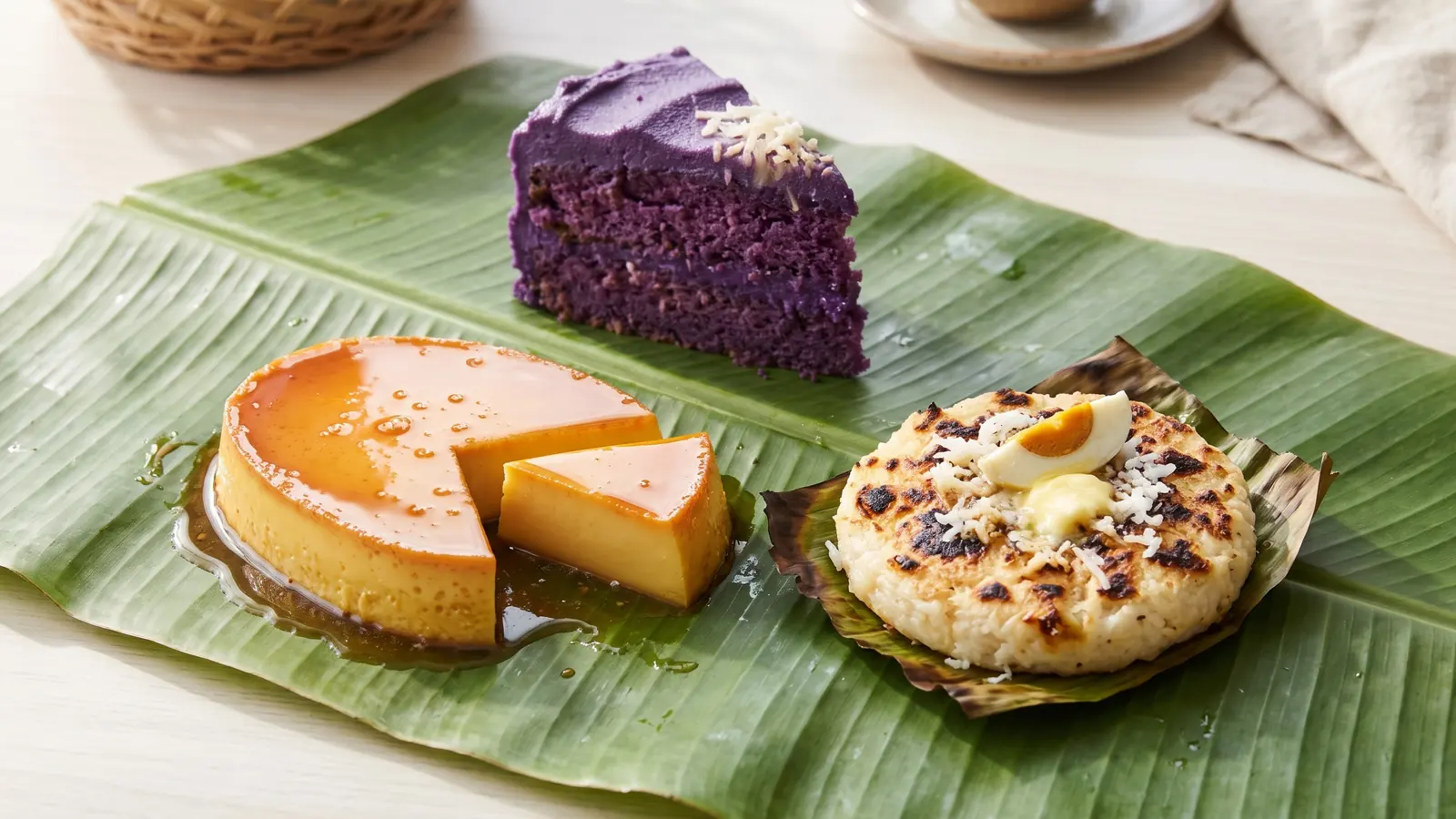
- Ube: ube halaya or powder for a purple cake.
- Pandan: pandan extract or juice for a green, fragrant version.
- Coconut: toasted coconut on top.
- Sweet bean paste: a layer in the middle.
Ube and pandan versions suit Filipino flavors and are often seen at Filipino potlucks in Hawaii.
Can you make it gluten-free?
Rice flour contains no wheat, so butter mochi is usually made without wheat flour. Anyone with a medical need to avoid gluten should read ingredient labels, since cross-contact in a bakery can occur, and ask the baker directly.
Is butter mochi on the Nanding’s Bakery menu?
The guide’s menu data does not list butter mochi at Nanding’s Bakery. The closest rice cake in the data is bibingka, reported in 2018 as made with ube, with no price found. Other sweets on record include hopia mongo, ensaymada and balintawak bread.
If you are looking for butter mochi in Honolulu, a local bakery or a potluck table is a likelier place than a Filipino panaderia, though the shop can confirm what it has on a given day. The menu page lists what is on record, and the hours and location page has the shop details.
Common questions
What is butter mochi made of?
Mochiko (sweet rice flour), butter, eggs, sugar, milk, coconut milk and baking powder. Some cooks add vanilla or a little salt. The batter is poured into a pan and baked like a cake.
Is butter mochi gluten-free?
It is usually made without wheat flour, since the flour is rice based. Anyone with a medical need to avoid gluten should read labels and ask the baker, because cross-contact can occur in a bakery.
Is butter mochi the same as Japanese mochi?
No. Japanese mochi is made by pounding steamed rice into a sticky paste. Butter mochi uses rice flour and is baked like a cake, so the texture is chewy but not stretchy.
How long does butter mochi keep?
At room temperature it keeps for a day or so, then firms up. A few seconds in the microwave soften a piece, and wrapped squares freeze well for longer storage.
Does Nanding's Bakery sell butter mochi?
The guide’s menu data does not list butter mochi at Nanding’s Bakery. The closest rice cake in the data is bibingka, reported in 2018 as made with ube.
Before you go, check the Nanding's Bakery Honolulu guide for the current hours and the menu.
This article is general information from an independent guide, not from Nanding's Bakery itself. For the store’s current details see hours and location.