Short answer
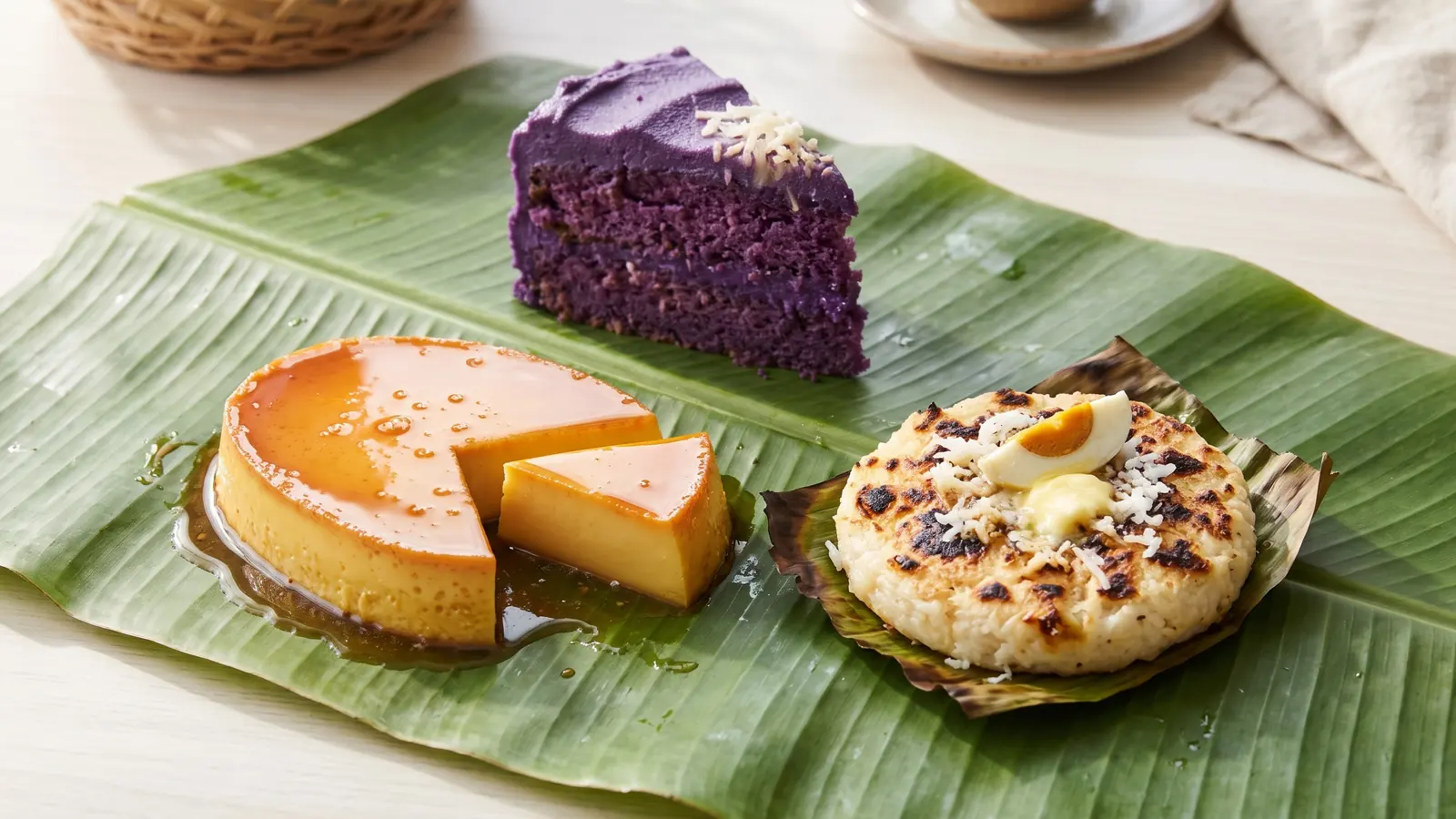
Bibingka is a soft Filipino rice cake made from rice flour, coconut milk and eggs, traditionally baked in a clay pot lined with banana leaf. It is closely tied to the Christmas season in the Philippines and is a member of the kakanin family.
Bibingka is a Filipino rice cake made from rice flour, coconut milk and eggs, baked until the top browns and the inside stays soft and moist. It is traditionally cooked in a clay pot lined with banana leaf, with heat above and below, and it is most associated with the Christmas season.
What is bibingka?
Bibingka is a baked rice cake that belongs to kakanin, the Filipino family of rice-based sweets. It sits between a cake and a custard: tender, a little springy, lightly sweet and fragrant from the banana leaf. The word is used for several regional cakes, so a bibingka in one province can differ from one in another.
Some versions use plain rice flour, others use glutinous rice flour or a mix, and some add ground rice that has been soaked. The result is always a cake that is made with rice, not wheat, in the traditional style.
How is bibingka traditionally made?
Bibingka is made by pouring a rice flour batter into banana leaf inside a shallow clay vessel and baking it with heat from above and below. The batter is rice flour, coconut milk, sugar and egg. Hot coals sit under the pot and on its lid, so the cake bakes from both sides. When it is done, the cook brushes it with butter or margarine and adds toppings.
- Salted egg: slices of salted duck egg, which add a savory bite.
- Cheese: often a local white cheese, grated or sliced.
- Sugar and grated coconut: sprinkled on after baking.
At home, an ordinary oven replaces the coals, and a baking dish replaces the clay pot. A hot oven and a lined pan will get close to the same result.
How do you make bibingka at home?
A home bibingka is a batter that is mixed, poured into a lined pan and baked. The method is short.
- Heat the oven and line a round or square pan with banana leaf, or grease it well if no leaf is available.
- Mix rice flour, sugar, baking powder, coconut milk and eggs into a smooth batter.
- Pour the batter into the pan and bake until the top is set.
- Add slices of salted egg and cheese, and bake a few minutes more until the top browns.
- Brush with butter, then sprinkle with sugar and grated coconut.
Banana leaf can be found frozen in Filipino and Asian grocery stores. Wilt the leaf briefly over a flame or in hot water so it does not tear when you fold it.
Why is bibingka a Christmas food?
In the Philippines, bibingka is sold fresh from stalls near churches during the series of dawn masses before Christmas, and it is eaten warm afterward with a hot drink. This is a seasonal tradition rather than a rule, and bibingka can be found at other times in bakeries and restaurants.
Bibingka is often paired with puto bumbong, a purple steamed rice cake, in the same tradition. Both are eaten in the cool early morning, which is part of why the pairing feels seasonal.
Bibingka vs puto vs butter mochi: what is the difference?
Bibingka is baked and soft, puto is steamed and fluffy, and butter mochi is baked and chewy. The three share rice flour and coconut milk, so they are often confused.
| Bibingka | Puto | Butter mochi | |
|---|---|---|---|
| Cooking | Baked | Steamed | Baked |
| Main flour | Rice flour | Rice flour | Glutinous rice flour |
| Look | Golden top, banana leaf | Pale and small | Golden top, dense squares |
| Texture | Soft, moist | Fluffy | Chewy |
| Typical topping | Salted egg, cheese | Cheese | None |
| Home | Philippines | Philippines | Hawaii |
Butter mochi is a Hawaii favorite with a chewier texture, and bibingka is softer and less dense.
What does bibingka taste like?
Bibingka tastes lightly sweet and creamy, with the clean coconut flavor of the milk. The banana leaf adds a faint tea-like smell. Salted egg and cheese push it toward sweet and savory, and a spoon of sugar on top adds a crackly edge.
It is best eaten warm, because it firms up as it cools. A piece that has cooled to room temperature is still pleasant, though denser.
What are the regional kinds of bibingka?
Bibingka differs by region, and the name covers cakes that look quite different. The list below gives the best known kinds, though local names and recipes vary.
- Bibingkang galapong: the classic cake made from ground soaked rice, coconut milk and sugar, baked in a clay pot.
- Bibingkang malagkit: a sticky version made with glutinous rice, often cooked with coconut milk and topped with toasted coconut curds.
- Cassava bibingka: a dense cake made with grated cassava, coconut milk and sugar, topped with a custard layer.
- Ube bibingka: a bakery-style cake that uses ube, giving a purple crumb and a mild, nutty sweetness.
The word is therefore closer to a family name than a single recipe. If you follow a recipe, check which kind it describes, because the batter and the texture change.
In Hawaii and on the mainland, Filipino bakeries and restaurants usually serve a baked version close to the galapong style, sometimes with ube for color. If you grew up with a particular bibingka, expect the bakery cake to differ slightly in texture and sweetness.
How is bibingka sold in bakeries?
Bakeries often make bibingka in small round or square pieces rather than in a clay pot, and flavors can include ube or cheese. This differs from the stall version, which is baked to order. Because the bakery version is made ahead, it benefits from a short reheat in an oven.
In Hawaii, Filipino bakeries sit alongside shops that sell other rice-based sweets, so bibingka is often compared with local favorites.
Where does bibingka appear at Nanding’s Bakery?
The guide’s menu data lists bibingka at Nanding’s Bakery, described as a rice cake made with ube and reported in 2018. No price was found, and whether it is on the shelf on a given day is not known. Because it is a bakery version, expect it to taste different from the clay pot cake sold from a Christmas stall.
Other ube items on record include an ube Spanish roll, ube bread and an ube-filled puff pastry. The menu page has the full list, and the hours and location page has the shop details. Call ahead if bibingka is the reason for your trip.
Can you freeze bibingka?
Yes. Wrap pieces tightly and freeze them, then warm in an oven until soft. The texture is best the day it is made, and reheating helps it recover. Keep toppings such as salted egg in mind, because they are best added fresh, so freeze the plain cake if you can.
Common questions
What is bibingka made of?
Rice flour, coconut milk, sugar and eggs, with butter or margarine brushed on top. Common toppings are salted duck egg, cheese and grated coconut, though recipes vary by region and cook.
Is bibingka the same as puto?
No. Bibingka is baked and has a golden top, while puto is steamed and pale. Both are Filipino rice cakes, and both are sometimes topped with cheese.
Why is bibingka eaten at Christmas?
It is a seasonal tradition. Bibingka is sold fresh from stalls near churches during the dawn masses before Christmas and eaten warm with a hot drink, though it is found at other times too.
Does bibingka contain wheat flour?
Traditional versions use rice flour, though some modern recipes add wheat flour. Ask the baker if it matters to you, since the ingredients differ from shop to shop.
How do you reheat bibingka?
Warm it in a low oven or toaster oven until soft, because bibingka firms up as it cools. A short microwave burst also works, though the top will not be as crisp.
This page is part of the independent guide to Nanding's Bakery, which has the address, hours and menu.
This article is general information from an independent guide, not from Nanding's Bakery itself. For the store’s current details see hours and location.